


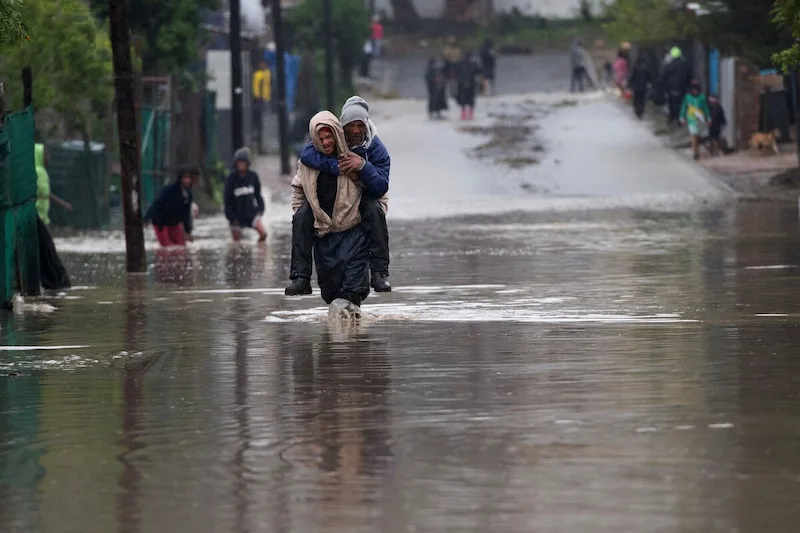


Climate change has been blamed for the recent devastating floods in South Africa's Western Cape region, which have resulted in the loss of lives and extensive damage to infrastructure. At least 11 people have died, and around 1,000 homes have been evacuated due to the torrential rain and subsequent flooding. The heavy rainfall, coupled with larger-than-normal spring tides and previous deluges, has caused major routes into Cape Town to be closed and has led to the destruction of wheat crops, bridges, and other vital infrastructure.
According to Anton Bredell, the Western Cape's provincial minister for local government and development planning, these heavy rains are clear indications of climate change. While the region's early warning systems and mitigation efforts have been effective, further investment in climate strategies is required to cope with the escalating intensity of extreme weather events. Bredell emphasized the need for increased budget allocation for future climate-related disasters.
Of the 11 fatalities, eight deaths were caused by electrocution in shanty towns as floodwaters overwhelmed illegal power connections. The floods have also resulted in the closure of 84 roads, severely hampering transportation in the affected areas. Western Cape Premier Alan Winde described the flood as a one-in-100-year event, highlighting the need for long-term planning and increased investment in flood management and resilience strategies.
In response to the severity of the situation, Cape Town Mayor Geordin Hill-Lewis declared a major incident, which permits the unlocking of additional resources and relief measures. However, the extent of the damage and losses is still being assessed, and there is a possibility that a provincial disaster could be declared. President Cyril Ramaphosa has offered national government assistance, and the province is considering seeking help from the army's engineers to repair roads affected by the flooding.
Meteorological data reveals record-breaking rainfall in various areas of the Western Cape and neighboring Eastern Cape. Stellenbosch experienced 194 millimeters (7.65 inches) of rain over a 48-hour period, while Elim received almost 130 mm of rain in just 24 hours, four times the previous September record. Several weather stations in Cape Town recorded the highest daily rainfall for September in over two decades. The South African Weather Service had issued Orange Level 9 Warnings for parts of the Western Cape, predicting heavy downpours, lightning, hail, and strong downdrafts.
South Africa has been grappling with climate-related disasters in recent years, including the devastating floods in KwaZulu-Natal in 2022 that claimed hundreds of lives and the severe drought that almost caused Cape Town to run out of water in 2017. These events highlight the urgent need for proactive measures to mitigate and adapt to the impacts of climate change in the country. The government and private sector must collaborate and innovate to address financing for climate-related catastrophes and build resilience in the face of unpredictable and escalating climate events.