


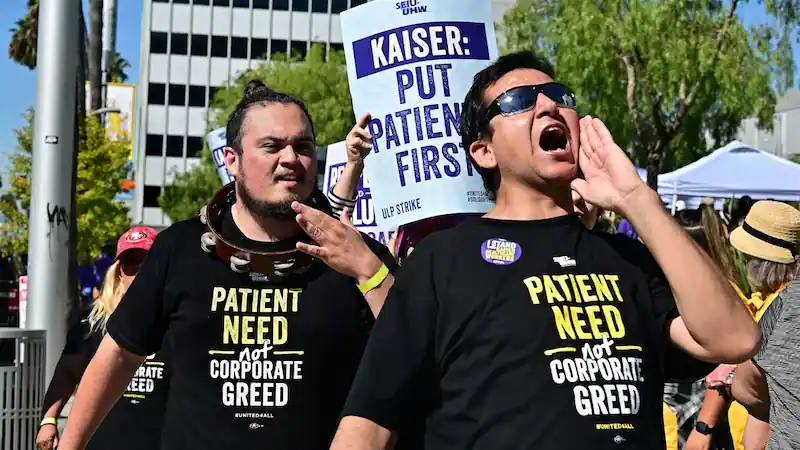


The largest health care strike in US history is set to conclude today after three days of protests. More than 75,000 health care workers across California, Colorado, Oregon, and Washington participated in the strike, organized by a coalition of unions representing various medical staff. The workers are demanding higher wages and solutions to the ongoing issue of understaffing, which has been further exacerbated by the COVID-19 pandemic. The strike also saw the involvement of nearly 200 Kaiser workers from Virginia and Washington, DC. However, there is a possibility of further strikes if negotiations do not produce satisfactory outcomes.
The primary cause behind the strike lies in the differing wage proposals put forth by the unions and Kaiser Permanente, a major nonprofit health plan in the US. Kaiser argues that the labor shortage has affected the entire industry and claims to have made efforts to recruit more staff, hiring over 10,000 people in union-represented jobs this year. However, some picketers argue that these hires merely involve internal employees changing roles and that more needs to be done to address the unsafe staffing shortage prevalent in the sector.
Kaiser Permanente has offered wage increases of 5% in the first three years of a new contract, followed by a 4% raise in the final year for all unionized employees. However, the coalition of unions has rejected this offer, seeking a 6.5% increase in the first two years and a 5.75% increase in the final two years. In addition to wages, the unions have also demanded an increase in the minimum pay to $24 per hour for all unionized employees by 2024. While there have been tentative agreements on certain issues regarding remote workers and tracking staff vacancies, no resolution has been reached on these key demands.
As a result of the strike, some patients have experienced disruptions in their healthcare. Appointments have been rescheduled, causing disappointment and frustration for individuals seeking essential medical services. One patient, Jennifer Fry, expressed her disappointment about having to wait longer for her ultrasound appointment to confirm the viability of her pregnancy. Another patient, Larriesha Malbrough, described feeling torn between respecting the picket line and needing emergency medical attention. Despite the emotional dilemma, she ultimately chose her health but felt a sense of guilt for crossing the picket line.
While Kaiser Permanente claims to have contingency plans in place to ensure adequate patient care during the strike, these accounts highlight the real-world impact that labor disputes can have on individuals' access to healthcare services. Although bargaining sessions between the unions and Kaiser are scheduled for the end of the coming week, the coalition of unions remains prepared to issue a 10-day warning if they believe unfair labor practices and bad faith bargaining persist. The future of the healthcare sector and the potential for further strikes still hang in the balance.