


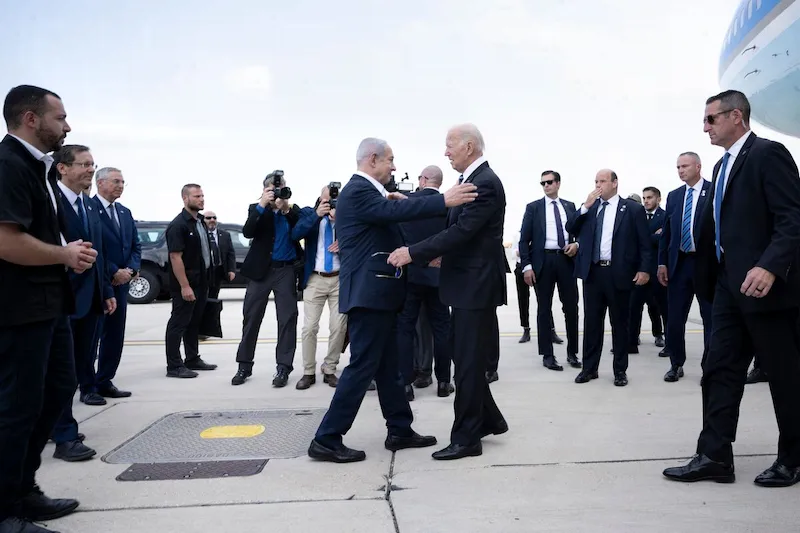


Joe Biden's short but significant visit to Tel Aviv sent a strong message of unwavering support for Israel, solidifying the US-Israel alliance. However, the trip fell short of achieving another crucial goal: winning over Arab leaders in the region. As the conflict between Israel and Hamas continues to escalate, Biden made it clear that the US would protect its ally, implicitly warning regional rivals like Iran to stay out of the fray. With the deployment of US aircraft carriers to the area and the promise of unprecedented support, Biden aimed to convey that the US would stand firmly by Israel's side.
Although Biden attempted to address concerns about the deepening humanitarian crisis in Gaza, Israeli officials remained cautious about allowing aid supplies into the region. They sought assurances that the aid would not be diverted to Hamas, a designated terrorist group by the US and the EU. Consequently, trucks carrying tons of aid remained at the border, exacerbating the dire situation for those in Gaza.
The challenge for Biden in gaining Arab acquiescence to Israel's offensive intensified after a devastating blast at a Gaza hospital claimed numerous lives. While Israel placed the blame on a failed missile launch by a Palestinian militant group, Hamas-controlled Gaza authorities and Arab leaders believed otherwise. Their differing perspective led Arab leaders to withdraw from a planned meeting with Biden in Jordan, marking another setback for the US in the region.
It was not just Biden's acceptance of Israel's explanation for the blast that troubled the region but also the manner in which he did so. By aligning himself unequivocally with Israel and stating that the "other team" was responsible, Biden appeared to make a politically motivated rather than fact-based decision. This move placed many US allies in a precarious position, straining regional relationships further.
Biden justified taking Israel's side by citing information from the Pentagon, with the White House later confirming their intelligence analysis supported Israel's claim of non-involvement in the blast. While this may have provided some comfort to traumatized Israelis seeking leadership and hope amid the crisis, it did little to appease Arab leaders and their public sentiment.
After his meeting with Prime Minister Benjamin Netanyahu and Israeli war cabinet members, Biden issued a cautionary message. He urged Israeli leaders not to be consumed by rage and to be mindful of potential mistakes, drawing parallels with America's response to 9/11 and the subsequent wars in Iraq and Afghanistan. Biden highlighted the need for a measured approach in Israeli decision-making as they plan their response to the escalating conflict.
As Biden departed for Washington, he had only obtained limited assurances regarding the entry of relief supplies into Gaza. The delay in addressing the dire humanitarian situation, coupled with ongoing Israeli airstrikes and the closure of borders, has intensified the crisis in Gaza. The United Nations Relief and Works Agency described the unfolding situation as an "unprecedented catastrophe," expressing concern about the lack of international response.
Protests against Israel and the US erupted in cities across the Arab world following the hospital blast, underscoring the widespread anti-Israel sentiment prevailing in the region. Biden's aides emphasized his unwavering support for Israel, which compelled him to continue with the visit despite the challenges faced. Simultaneously, the visit allowed Biden, an 80-year-old leader, to showcase his active and engaged approach to voters back home.
Winning the support of Arab leaders was always going to be difficult, particularly considering their priority of preserving national security and the prevailing strong anti-Israel sentiment among their populations. With Israeli officials determined to proceed with plans to eradicate Hamas from Gaza, and with the added threats from Iran and Hezbollah, the risk of a wider conflict looms large.
French President Emmanuel Macron and UK Prime Minister Rishi Sunak are slated to visit Israel in the coming days, potentially buying some additional time before a ground invasion of Gaza becomes inevitable. The world watches with growing concern and hopes for a de-escalation of tensions before further devastation unfolds in the region.