


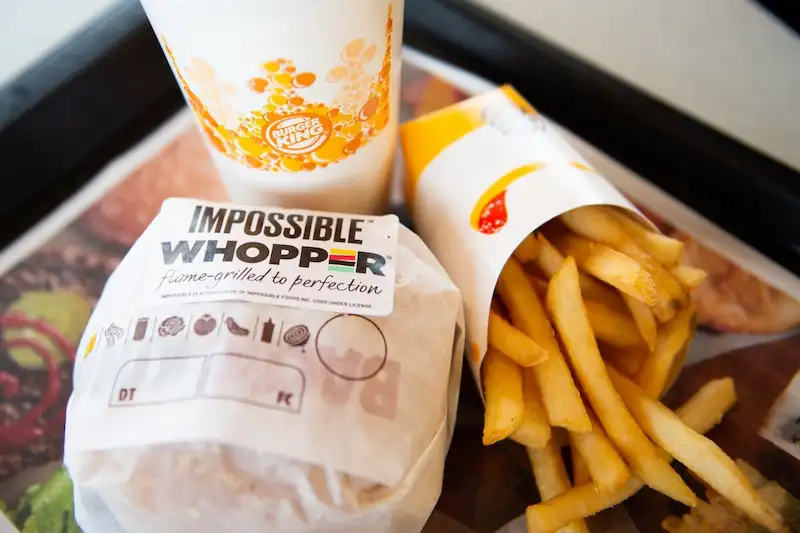


Fast-food giant Burger King has shifted its focus away from vegan and plant-based offerings, signaling a potential decrease in the popularity of these options. CEO Josh Kobza stated that while demand for plant-based alternatives remains stable, the company is unlikely to expand its plant-based menu in the US in the near future. Instead, Burger King plans to concentrate on its core offerings, particularly flame-grilled burgers. The decision to scale back on vegan options reflects a lack of significant changes in consumer trends, despite a strong presence in the Western European market where plant-based options fare better.
Burger King made headlines in 2019 when it became the first major national fast-food chain to introduce an alt-meat burger, the Impossible Whopper, to its regular menu. The soy-based patty, supplied by Impossible Foods Inc. in the US, received accolades as an environmentally friendly solution to combating the greenhouse gas emissions associated with animal agriculture. However, Impossible Foods' use of genetically modified ingredients prevented it from entering the European market, where Burger King relies on different suppliers for plant-based alternatives.
While maintaining stable sales is positive news for plant-based meat producers, the declining consumer interest in these products is cause for concern. Beyond Meat, a leading plant-based meat company, recently slashed its full-year revenue forecast for the second time in three months due to weaker-than-expected demand. Market data trackers have also reported declining sales across the plant-based category.
Nevertheless, it is worth noting that the demand for plant-based options across the globe is still strong, specifically in Western Europe. Despite Burger King's current shift in focus, plant-based products continue to gain traction in international markets. However, for these alternatives to have a significant impact on greenhouse gas emissions, sales would need to experience substantial growth.
The future of plant-based options in the fast-food industry remains uncertain. While Burger King's decision to pause its expansion of vegan offerings in the US may indicate a temporary setback for the plant-based movement, it also suggests the need for continued innovation and improvement in these products to maintain consumer interest. As the industry evolves, it will be interesting to observe how consumer preferences and market dynamics shape the future of fast-food menus and the plant-based sector.