


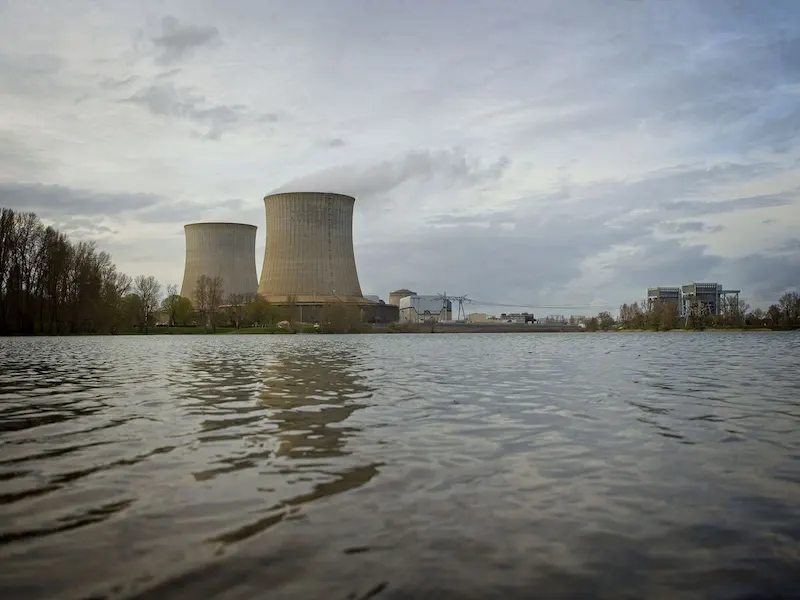


France is set to make a crucial decision by the end of 2026 regarding the construction of eight new large nuclear reactors. This comes in addition to the six atomic plants that are already planned to be built. President Emmanuel Macron has expressed his belief that France could potentially construct up to 14 new reactors by 2050, aligning with the country's goal of becoming carbon neutral by the mid-century mark. The end-2026 deadline, which was unveiled in a government document, would fall just months before the next presidential election.
The update to France's energy and climate strategy, taking into account Europe's objective of accelerating emissions reduction by 2020, largely confirms plans that have been outlined in recent months. In addition to doubling down on nuclear power, France also aims to expedite the deployment of clean energy and renewable fuels, as well as invest more in energy-saving measures for homes, offices, and factories.
President Macron's motivation for advocating more new nuclear plants and extending the lifespan of existing ones is to meet the growing power demand as the country shifts away from fossil fuels. The government has even bought out minority shareholders of Electricite de France SA (EDF), which has faced challenges in recent years with defects in its aging reactors and construction cost overruns in new atomic projects in France and the UK.
Energy Transition Minister Agnes Pannier-Runacher stated in an interview that by the end of 2026, a more precise view of the deployment pace for each energy type will be established, along with an evaluation of the costs and benefits of new nuclear projects. By that time, EDF will have completed the addition of a 57th reactor to the grid in Flamanville and will have made progress on plans for more atomic facilities in both France and the UK.
According to the government document, EDF is expected to make a final investment decision for the first six new large-scale reactors by the end of 2024, aiming for them to become operational between 2035 and 2042. Various financing options are being considered, including direct state investment and private funding, as the utility giant is unlikely to bear the entire cost on its own due to its existing debt burden.
In addition to the large-scale reactors, EDF also intends to commence the construction of a small modular reactor from 2030 onwards, as mentioned in the document. The government also plans to encourage the development of innovative types of small reactors.
The main objectives of France's energy and climate strategy include reducing energy consumption by 40-50% by 2050, reducing the share of fossil fuels in final energy consumption to 29% by 2035, increasing power output by 10% in 2030 and 55% in 2050, and doubling low-carbon heat production by 2035.
The decision to build additional nuclear reactors in France will have significant implications for the country's energy landscape and its pursuit of carbon neutrality. As the government weighs the costs and benefits, it remains to be seen how the final decision will shape France's energy future.