




Switzerland is gearing up for another attempt to improve its strained relationship with the European Union (EU), but the plan is already facing backlash. Before the government even announced its intention to restart formal talks with the EU, unions raised concerns about workers' standards, and the right-wing Swiss People's Party (SVP) accused the government of selling out the country and reignited its anger over high immigration. The talks aim to streamline the current complex web of bilateral agreements that cover various aspects of trade and cooperation between Switzerland and the EU.
Two years ago, Switzerland walked away from a potential accord with the EU, causing political and economic upheaval while frustrating the bloc. This move was particularly bold considering that the EU is Switzerland's largest trading partner, accounting for half of its exports, and facilitating goods trade amounting to more than 300 billion euros ($325 billion) annually.
Although the existing bilateral agreements have generally served their purpose, the EU remains dissatisfied with the piecemeal approach. However, this time around, Switzerland may not have the luxury of making such a dramatic move. In an increasingly fragmented and tense geopolitical world, with national interests taking precedence, Switzerland needs to display goodwill. Otherwise, it risks being increasingly marginalized by its larger neighbor and losing the EU's support during challenging times.
The tensions between Switzerland and the EU have already had tangible consequences. Swiss stocks and shares have been barred from trading in the EU since 2019, impacting the stock exchange. Power companies have expressed concerns about energy security, while Swiss scientists have been unable to access research funding in the EU's Horizon program.
The controversy surrounding Switzerland's relationship with the EU echoes the protracted Brexit debate that has dominated UK politics for years. Emotive language and dire warnings about unchecked immigration and loss of sovereignty have become commonplace in the discourse, both in Switzerland and across Europe. Concerns about immigration resonated strongly with Swiss voters in the October elections, and the SVP, known for its strongholds in the Swiss Alps region, secured one of its best results in history.
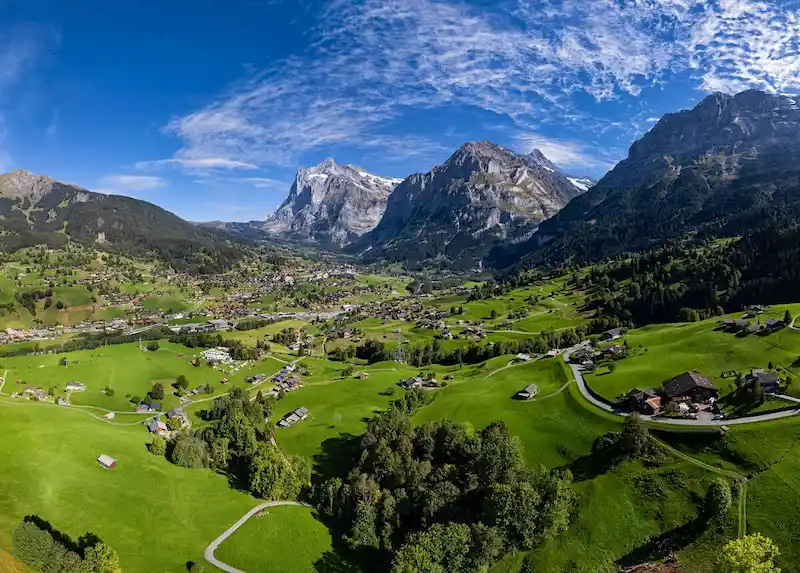
Finding a resolution presents a daunting task for the Swiss government, as any new deal will need to be endorsed at home through a national vote under Switzerland's direct democracy system. One can witness this clash of ideas in action in places like Grindelwald, an alpine resort town reliant on immigration despite being a stronghold of the SVP. The party obtained strong support in the region despite its businesses heavily relying on immigrant workers. While locals may not object to workers from specific countries, concerns about asylum seekers from Africa and the Middle East persist.
The Swiss government and EU officials anticipate that negotiations on a new EU-Swiss deal will commence in the spring. However, the duration of these negotiations remains unclear. After year-long "exploratory talks" previously, some aspects may have already been discussed behind closed doors. Nonetheless, the Swiss government may not be eager to rush the process, fearing it may appear too yielding to its larger neighbor. Swaying the wide spectrum of opponents who have already erected barriers will require careful navigation.
"To ensure Switzerland's prosperity, we need immigration," says Stefan Grossniklaus, head of Grindelwald's hotel association. "But it needs to be the right immigration." Balancing competing concerns and interests will be critical in Switzerland's pursuit of a more streamlined and mutually beneficial relationship with the EU.