


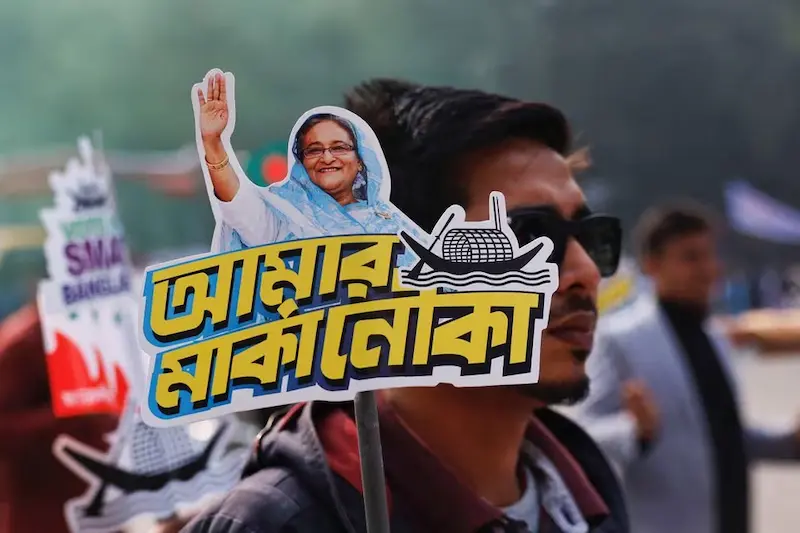


In a general election marked by controversy and violence, Bangladesh Prime Minister Sheikh Hasina is expected to secure a fourth consecutive term and her fifth overall for the Awami League-led alliance. However, the main opposition party, the Bangladesh Nationalist Party (BNP), has boycotted the election, leading to concerns over the country's democratic process. Ahead of the vote, there have been reports of clashes and unrest, raising doubts about the credibility and fairness of the election.
The United States and Western nations, significant customers of Bangladesh's garment industry, have called for a free and transparent election. Despite these appeals, the BNP's decision to boycott the election has left the country on the brink of virtual one-party rule, according to human rights groups. Approximately 120 million voters will have the opportunity to choose from nearly 2,000 candidates for the 300 directly elected parliamentary seats. The high number of independent candidates, totaling 436, has raised suspicion that the ruling party has fielded "dummy" candidates to give the illusion of a competitive election.
The BNP has urged the public to boycott the poll and has called for a two-day nationwide strike starting from Saturday. The party has accused the Awami League of organizing a sham election. They argue that the ruling party has failed to create a neutral environment by refusing to meet demands for the Prime Minister's resignation and the establishment of a neutral authority to oversee the electoral process. In recent months, Dhaka has witnessed anti-government protests, allegedly orchestrated by the opposition, leading to several deaths.
With the outcome of the election seemingly predetermined and the risk of violence high, voter turnout is expected to be low. On the eve of the election, violence erupted across the country, including a passenger train fire, which the government claims was an act of arson, resulting in the death of at least four people. Additionally, several polling booths and institutions were set ablaze, further highlighting the tension and unrest surrounding the election.
To maintain peace and security, troops have been deployed across Bangladesh, while nearly 800,000 police personnel, paramilitary forces, and police auxiliaries will guard polling booths on election day. However, concerns remain about the potential for further violence and disruption.
Critics of Prime Minister Sheikh Hasina accuse her of authoritarianism, human rights violations, and cracking down on free speech and dissent during her 15-year tenure. Nevertheless, she has also been credited with revitalizing Bangladesh's economy and the garment industry, which has become a vital sector for the country.
Despite being the main rival to Hasina, BNP leader Khaleda Zia, a two-time premier, is effectively under house arrest on corruption charges. The opposition alleges that these charges are politically motivated. Khaleda's son, Tarique Rahman, who is the acting chairman of the BNP, is currently in exile, facing charges that he denies.
Aside from the political controversy, Bangladesh's economy has faced challenges, including a sharp slowdown attributed to rising fuel and food import prices due to the Russia-Ukraine conflict. To mitigate these issues, Bangladesh turned to the International Monetary Fund for a bailout of $4.7 billion last year.
As Bangladesh heads towards another term under Prime Minister Sheikh Hasina's leadership, the country's political landscape becomes increasingly polarized and democracy suffers from a lack of opposition. The extent of the boycott's impact on the election's legitimacy and the subsequent implications for Bangladesh's political future remain uncertain, leaving both national and international observers watchful.