


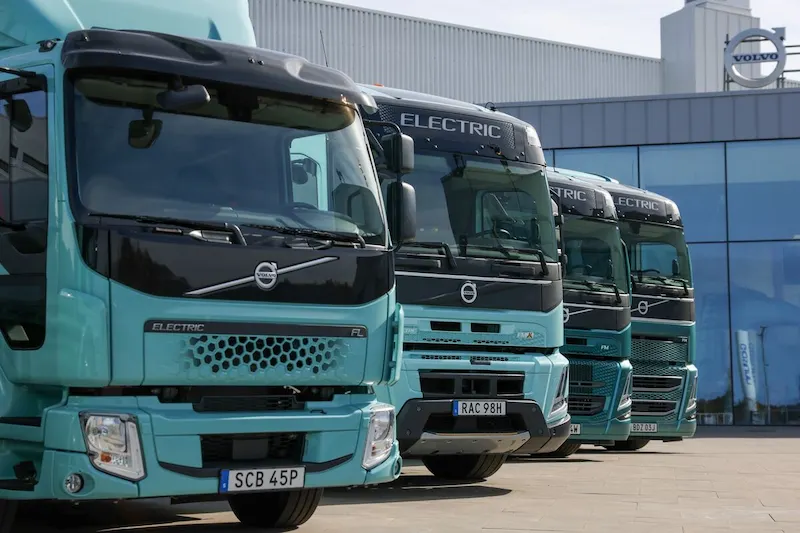


Volvo AB, the world's second-largest truckmaker, has revealed plans to gradually reduce production due to normalizing demand and supply chain disruptions. Following years of record order banks and pent-up demand, the transport industry has absorbed much of the backlog, and lead times have returned to more normal levels, particularly in Europe. As a result, Volvo's stock fell by 4.6% in early Stockholm trading, although it has risen by 21% over the past year.
In a statement announcing their fourth-quarter earnings, Volvo stated that demand is returning to more average levels in various segments and markets. Truck net order intake declined by 9% in the fourth quarter to just over 49,000, primarily driven by a 24% decline in Europe.
As a response to the changing market conditions, Volvo is reducing production at its Tuve plant in Sweden, and other locations will also be impacted. CEO Martin Lundstedt confirmed this plan, elucidating that the decision is in line with an earlier report by broadcaster Sveriges Radio Ekot.
Additionally, Volvo adjusted its market forecast for heavy-duty truck registrations in Europe, lowering it from the previous record high of 2021 to 280,000. However, the forecast for North America remains unchanged. Both Volvo and its main competitor Daimler Truck Holding AG, which are dominant in North America and Europe, are facing potential recession risks in these markets over the next 12 months.
Truck manufacturers have recently experienced strong demand and high prices due to a combination of pent-up demand and supply chain disruptions. However, Volvo anticipates that this year, demand will return to more average levels. Despite the challenging market conditions, Volvo reported better-than-expected fourth-quarter earnings, largely due to effective cost management and navigating supply chain disruptions. The company's adjusted operating profit reached 18.4 billion kronor ($1.76 billion), surpassing analyst forecasts of 17.5 billion kronor.
Moreover, Volvo has proposed a dividend of 7.50 kronor per share, along with an extra dividend of 10.50 kronor per share, demonstrating its commitment to returning value to its shareholders.