


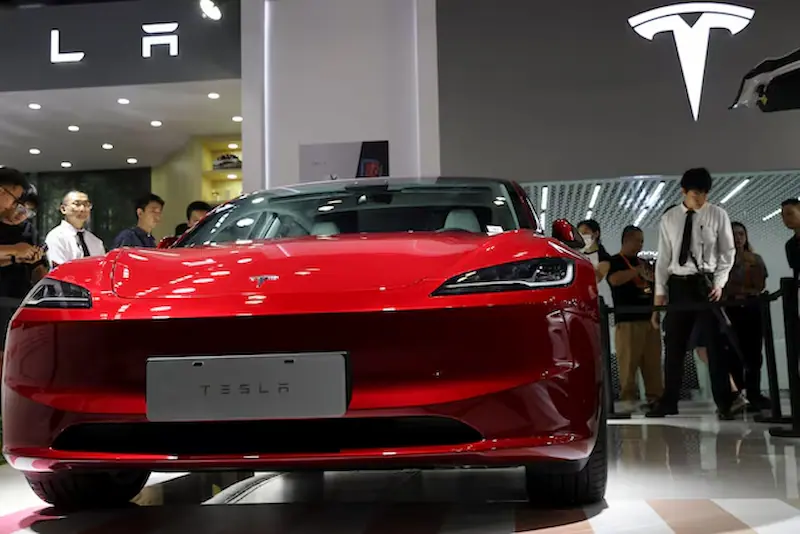


In a notable turnaround, Tesla Inc. saw a 15% increase in shipments from its Shanghai factory in July, breaking a trend of monthly declines in output from its most efficient plant worldwide. The automaker delivered an estimated 74,117 Model 3 sedans and Model Y SUVs last month, surpassing both last year's figures and the previous month's production numbers. Despite this uptick, Tesla's overall production in China is still below levels seen in the same period last year, signaling a slowdown in demand for its electric vehicles.
Elon Musk, the CEO of Tesla, has recently shifted focus towards artificial intelligence and autonomous vehicle development, causing some delays in the unveiling of robotaxi prototypes. Musk confirmed a postponement of the event to October, suggesting that these endeavors may take time to yield results. As a result of this news, Tesla shares fell by 2.6% before the start of regular trading on Friday.
Meanwhile, BYD consolidated its position as a leader in China's new-energy vehicle market, recording a 31% increase in sales to 340,799 units. Although plug-in hybrid deliveries soared by 67% in July, battery-electric vehicle sales dipped to a five-month low. Overall, China's new-energy vehicle market saw a 29% surge in sales year-on-year, partially boosted by Beijing's decision to double subsidies for consumers trading in older vehicles.
Despite the industry-wide growth, some automakers faced challenges on a month-to-month basis. Geely Automobile Holdings Ltd.'s Zeekr experienced a 22% decline in July sales compared to June. The company attributed this drop to equipment checks and production line repairs typically conducted during the summer. Zeekr remains committed to reaching a monthly run rate of 30,000 units by the fourth quarter, as it gears up for the launch of several new models.
In a similar trend, Geely and Great Wall Motor Co. reported decreases in July sales, reflecting a broader slowdown in China's passenger vehicle market. Additionally, new-energy passenger vehicle wholesales slipped by approximately 3%, driven by subdued economic growth and consumer spending patterns.
Among China's other top US-listed EV manufacturers, Li Auto Inc. stood out with a 6.8% increase in sales month-on-month, primarily bolstered by the popularity of its extended-range EVs. With total sales of 51,000 vehicles, Li Auto achieved nearly a 50% surge in year-on-year figures, showcasing a strong performance in a competitive market landscape.