


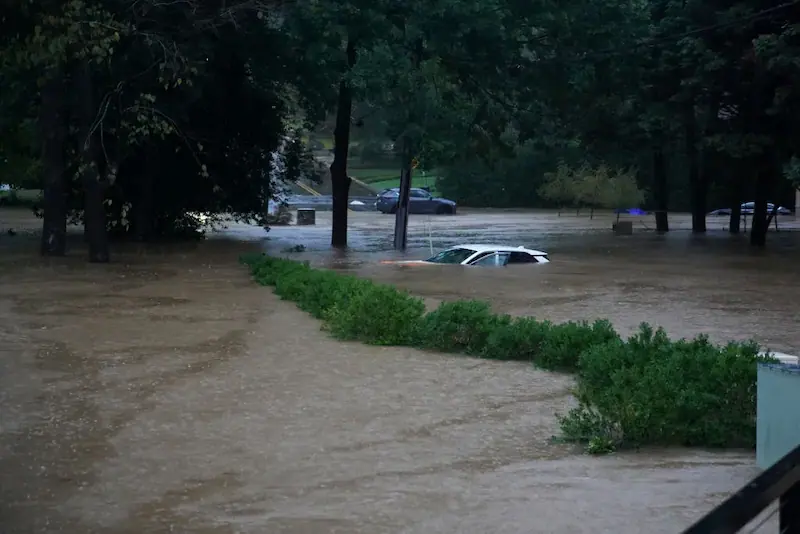


Hurricane Helene has caused widespread devastation across the Southeastern United States, with its effects being felt well before it made landfall on Florida's west coast. As a tropical depression now meandering through Kentucky, the storm has left a trail of destruction, claiming at least 21 lives and leaving a path of catastrophic flooding in its wake.
One of the key factors contributing to the severity of the damage is the unprecedented amount of rainfall that preceded Helene's landfall. Strong upper-level troughs in the jet stream steered the storm north, leading to heavy rains in regions as far north as the Carolinas and the southern Appalachian Mountains. Asheville, North Carolina, particularly bore the brunt of these early showers, breaking daily rainfall records and receiving nearly 10 inches of rain over two days.
The once-saturated ground now faces the peril of even more rainfall as Helene's remnants continue to traverse the region. With up to six more inches of rain expected in already waterlogged areas, the risk of flooding, power outages, and tree collapse is heightened. These conditions have already pushed dams in the region to their limits, prompting the National Weather Service to declare a flash flood emergency near the Lake Lure Dam in southern North Carolina.
The storm's impact extends beyond flooding, with extensive power outages reported across Georgia, the Carolinas, and the southern Appalachians, in addition to the previously affected areas in Florida. As Helene weakens and heads towards the Ohio Valley and lower Mississippi Valley, further storm advisories have been issued for large swathes of Illinois, Indiana, and Missouri. In middle Tennessee, a flood warning has been issued with up to five inches of rainfall expected through Saturday.
Scientists attribute the extreme rainfall tied to hurricanes like Helene to climate change, highlighting the capacity of warmer air to carry more moisture and fuel more intense storms. As communities brace for the aftermath of Helene's wrath, the resilience of the affected regions will be put to the test in the days to come.