


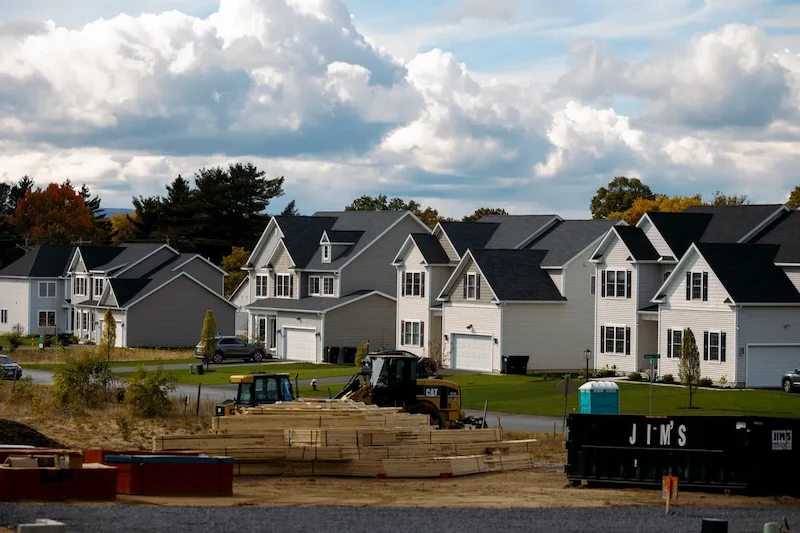


The American housing market has slipped into yet another uneasy chapter this summer. July brought a decline in sales of newly built single-family homes, a small drop on paper but one that speaks to a deeper fatigue in the market. The Commerce Department reported that purchases of new homes fell 0.6% to an annualized pace of 652,000 units. At first glance, that may not sound dramatic, but the figure carries more weight when set against the previous month’s strong upward revision, which had temporarily raised hopes that buyers were regaining some appetite.
The story here is not about one month’s numbers but about the stubborn drag of high mortgage rates and the cooling economy that surrounds them. Even as interest rates have eased slightly from their winter peaks, they remain far above the comfort zone for average families. Wages simply have not kept up. A couple looking for a modest home today is often confronted with the same sticker shock that pushed them out of the market six or twelve months ago. What should feel like a moment to celebrate—the signing of a contract for a first home—has instead become a struggle with affordability that too often ends in disappointment.
Regionally, the pattern is uneven. Sales held steady in the Northeast, nudged higher in the West, but fell sharply in the South and Midwest. That uneven geography shows how fragile demand really is. A new home sale isn’t just about bricks and lumber; it reflects whether families believe their jobs are secure, whether they trust that inflation won’t eat their paychecks, whether they feel the risk of committing to thirty years of debt is worth it. Right now, many are pulling back.
Economists aren’t sugarcoating it. The consensus is that housing will remain weak through the rest of the year. Some pin hopes on a September rate cut by the Federal Reserve, which could make borrowing slightly cheaper, but that optimism is tempered by the Fed’s cautious stance. Jerome Powell has acknowledged the risks to the labor market, yet inflation lingers like a shadow in every policy discussion. Until clearer signals come from the central bank, homebuyers are left guessing—and often choosing to wait.
The ripple effects are already showing. Builders are cutting prices to lure hesitant buyers, and inventories of unsold homes are hovering near levels not seen since the lead-up to the financial crisis. Prices of new houses have slipped—median sales are now down almost 6% from last year. That may sound like relief for buyers, but falling prices also signal a market under pressure, where builders and sellers alike are conceding ground just to keep deals moving.
For now, the most active part of the market is in lower-priced homes under $500,000, while higher-end properties sit longer on the shelf. The pace of construction has improved somewhat, yet the number of completed but unsold houses has climbed to a sixteen-year high, a sign that builders are running ahead of demand. Clearing that backlog will take time, and until it does, it will likely cap any rebound in new home prices.
So the summer ends with a housing sector that feels stuck: not collapsing, but not recovering either. Families remain wary, builders grow cautious, and the Fed holds the key to the next move. The numbers may shift month to month, but the underlying picture is one of a market waiting for relief that never seems to fully arrive.