


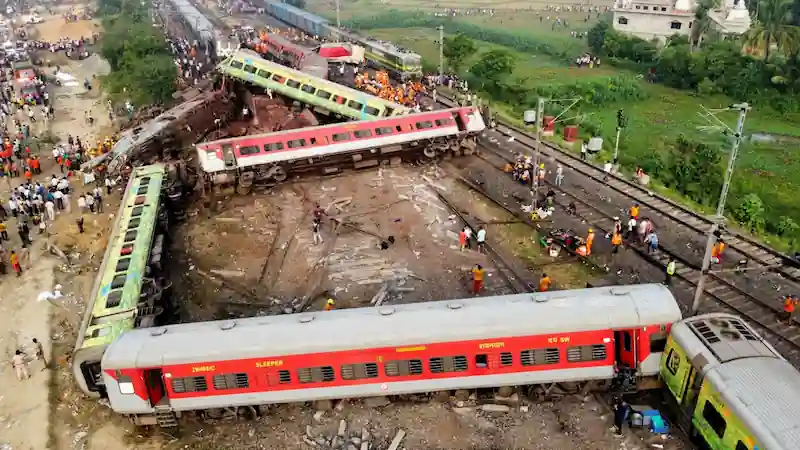


Indian Prime Minister Narendra Modi spent his Saturday assessing the aftermath of a railway disaster that killed over 280 people and left more than 1,000 injured. A collision between a freight train and two passenger trains in the city of Balasore, in the eastern state of Odisha, has renewed calls for increased safety measures on India's railways, which transport over 13 million people each day. The country's railway infrastructure suffers from ageing and maintenance issues, and although the government has invested millions in upgrading the network, years of neglect have left tracks to deteriorate. The cause of Friday's crash remains unclear, but it is suspected to have been caused by a traffic signalling failure. A high-level investigation has been launched to investigate the cause of the crash.
The incident has shocked India and the world, leading a number of political leaders, including Pakistani Prime Minister Shehbaz Sharif, British Prime Minister Rishi Sunak, EU Commission President Ursula von der Leyen and Japan’s Prime Minister Fumio Kishida, to offer their condolences. The crash has already surpassed the death toll of another horrific railway incident in northern Uttar Pradesh state in 2016, in which over 140 people died.
The crash site has been described as chaotic and despairing, with dozens of dead bodies visible amidst mangled train cars, strewn personal belongings and shattered windows. Passengers and rescuers were forced to scramble through overturned train carriages in an attempt to rescue those trapped and injured. Emergency teams, including hundreds of ambulances and fire service units, were dispatched to the site to deal with the aftermath.
Although India's railway network is one of the largest in the world, having been constructed over 160 years ago during British colonial rule, it is increasingly in need of modernisation and improvement. The country has invested millions in upgrading transport links, including the construction of expressways and dedicated freight corridors, but accidents continue to occur, often due to poor maintenance and ageing infrastructure.
Modi visited the crash site on Saturday to meet with emergency teams and console injured passengers. He pledged to investigate the cause of the accident and to ensure that those responsible face severe punishment. With many passengers still trapped under the wreckage, the death toll is expected to rise in the coming days.
The disaster has brought into focus the urgent need for India to modernise and upgrade its infrastructure networks, particularly its railways, where accidents continue to claim a high number of lives each year.