


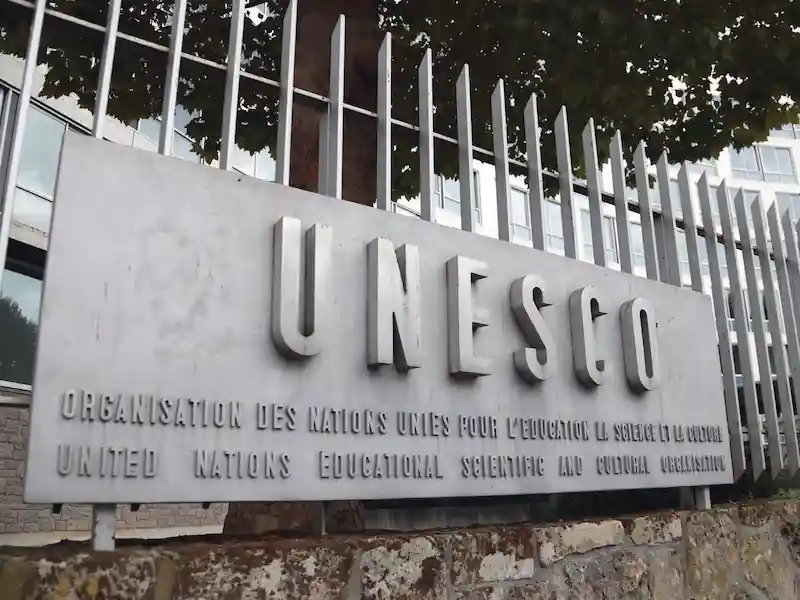


The United States has announced its decision to rejoin the United Nations Educational, Scientific, and Cultural Organization (UNESCO), ending a decade-long dispute. The decision was prompted by concerns that China is dominating UNESCO policymaking, particularly in the fields of artificial intelligence and technology education on a global scale. At the same time, the US has agreed to pay over $600 million in back dues owed to the organization.
Following UNESCO's decision to include Palestine as a member state in 2011, the US interrupted its funding, alongside Israel. The Trump administration subsequently announced their withdrawal from the agency in 2017, citing long-standing anti-Israel bias, and management issues.
Richard Verma, the US Deputy Secretary of State for Management and Resources, recently sent a letter to the UNESCO Director-General, Audrey Azoulay, notifying her of the plan to rejoin. Despite the initial dispute over Palestine, Verma stated in the letter that the US has noticed progress in overcoming politicization and reform initiatives surrounding Middle Eastern disputes.
Upon the announcement, applause rang throughout UNESCO headquarters, with ambassadors from around the world giving their support. The US' decision to rejoin is now expected to face a vote by the 193 members of UNESCO next month.
The decision to rejoin is a significant financial boost to UNESCO, known for its World Heritage Program, projects for fighting climate change, and educating young girls. Before the US withdrawal, it was the agency's largest contributor, providing 22% of the overall funding.
Although China has benefited from the US withdrawing from UNESCO, its Ambassador to UNESCO, Jin Yang, welcomed the news of the US' return, saying that China "appreciates" UNESCO's efforts to bring America back, adding that the US's return means that it acknowledges the mission and goals of the organization.
Audrey Azoulay has worked tirelessly to address the issues that led to the US leaving. To achieve the US' return, Azoulay built consensus among Jordanian, Palestinian, and Israeli diplomats around sensitive UNESCO resolutions. According to analysts, she has also succeeded in calming tensions by improving the organization's response to contemporary challenges, modernizing its functioning, and continuing major initiatives on the ground.
Under the current plan, the US will pay its 2023 dues plus $10 million in bonus contributions this year. The funds will be earmarked for Holocaust education, preserving cultural heritage in Ukraine, journalist safety, and science and technology education in Africa. The Biden administration has already requested $150 million for the 2024 budget to go towards UNESCO dues and arrears, with additional requests in the ensuing years until the full debt of $619 million is cleared.
In conclusion, America's decision to rejoin UNESCO will undoubtedly have far-reaching consequences, particularly as the agency is seen as a key player in shaping technology and science teaching around the world. Moreover, UNESCO's return will boost programs intended to regulate artificial intelligence, educate women in Afghanistan and chronicle victims of slavery in the Caribbean, a triumph for a tireless diplomat who worked hard to bring the US back to the fold.