


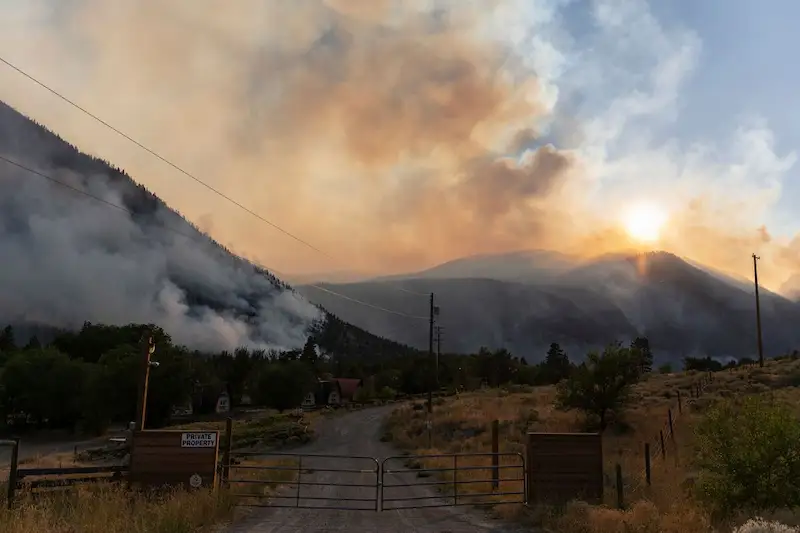


Record-breaking wildfires in Canada have prompted the province of British Columbia to declare a state of emergency as the blazes move closer to key population centers. With tens of thousands of people evacuating their homes, BC Premier David Eby called for all available resources to be mobilized in the battle against the fires. The city of Kelowna, located in the picturesque Okanagan Valley region, had already declared a state of emergency earlier in the week. Known for its vineyards, orchards, and ski hills, the area is now threatened by the advancing wildfires.
In British Columbia, approximately 15,000 individuals have been placed under evacuation orders, while tens of thousands more are on alert for potential evacuation. The situation is described as unpredictable and challenging, with difficult days ahead, according to Eby. The entire population of Yellowknife, the capital of the Northwest Territories, consisting of around 22,000 people, is also fleeing the wildfires as government officials set an evacuation deadline. As of Friday evening, approximately 19,000 residents had been cleared from the city.
The increase in intense wildfires globally, from locations such as Hawaii to Greece, has been attributed to the effects of climate change. In Canada, the number of fires and the area burned has surpassed average levels for this time of year, with more land burned than the entire country of Greece. The ongoing wildfires have disrupted oil and gas production in Alberta and caused smoke to blanket populated areas, including Toronto, Ottawa, and parts of the United States, such as New York City.
Prime Minister Justin Trudeau’s government is coordinating efforts with local authorities to assist in evacuation and firefighting operations. However, the extent of the damage caused by the wildfires is still uncertain. In British Columbia, evacuation orders have been issued for the majority of West Kelowna, and the entire city of Kelowna is on alert with evacuations already underway in the northern part of the city.
Satellite imagery reveals heightened wildfire activity in the province, while videos and photos captured scenes of raging fires engulfing trees and buildings, exacerbated by strong winds and smoky skies. Flights at Kelowna International Airport have been canceled as airspace in the area was closed to allow for aerial firefighting efforts.
While wildfires are not uncommon in the region, British Columbia is currently facing its most devastating wildfire season on record, with an area nearly as large as New Jersey already ravaged by the fires. This week also marks the 20th anniversary of the 2003 Okanagan Mountain Park Fire, which destroyed numerous homes south of Kelowna but spared the city itself.
In the Northwest Territories, a map displays numerous wildfires, including those surrounding Yellowknife. The city, situated near the north shore of Great Slave Lake, around 400 kilometers (250 miles) south of the Arctic Circle, has seen a mass evacuation as residents fled the advancing fires. Evacuees have faced long waits as they lined up for evacuation flights, while cars filled the highways leading out of the capital. Military aircraft have been deployed to evacuate individuals from hospitals and long-term care facilities.
The decision by Meta Platforms Inc. to end news availability on Facebook and Instagram in Canada has hindered evacuees from sharing news articles on their social media platforms. In response, Facebook activated its "Safety Check" feature for the Yellowknife wildfires, allowing users to inform friends and family that they are safe and to access updates from credible sources.