


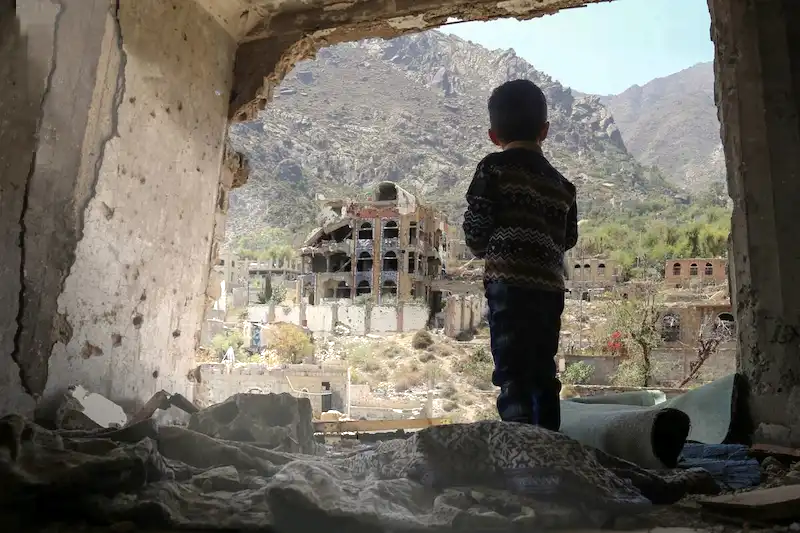


A growing rift between Saudi Arabia and the United Arab Emirates (UAE) over the future of Yemen is posing a serious threat to the prospects of peace in the war-torn country. These two Gulf powers had previously joined forces to combat the Houthi rebels, who are backed by Iran and had been advancing rapidly in Yemen in 2015. However, their alliance has become strained as they now support rival groups competing for control of the strategically important nation.
The diverging views on the post-war Yemen are not only jeopardizing the delicate truce with the Houthi rebels but also escalating tensions between proxy groups supported by Saudi Arabia and the UAE. Recent clashes between UAE-backed forces and Houthi fighters have already resulted in numerous casualties. This deepening conflict between the two Gulf Arab powers could further escalate and plunge Yemen into a renewed wave of violence.
The primary source of contention revolves around the aspirations of Yemeni separatists supported by the UAE, who are pushing for the establishment of an independent state in the south of Yemen. This demand has infuriated Saudi Arabia, which advocates for Yemen's territorial integrity. The Biden administration is particularly concerned about this disagreement as it fears that it could strengthen Iran's influence and derail its objective of ending the long-standing conflict, which has already claimed the lives of nearly 400,000 people.
The UAE government officials have vehemently denied any tensions with Saudi Arabia, emphasizing their full support for Saudi efforts to bring about a political settlement and halt the war through United Nations-mediated negotiations. However, experts on Yemen argue that the competition between Saudi Arabia and the UAE, played out through their respective local proxies, diminishes the chances of achieving a political compromise and long-lasting peace.
The upcoming weeks will be crucial as Saudi Arabia prepares for another round of talks with Houthi leaders. The Houthis have threatened to resume their attacks on Saudi Arabia, including the Neom megaproject, if their demands for reparations and a bigger share of oil and gas revenues are not met. Meanwhile, the US Special Envoy for Yemen, Tim Lenderking, recently held talks in Abu Dhabi and Riyadh to ensure that tensions between Saudi Arabia and the UAE, and the factions they support, do not undermine the ongoing peace efforts.
The deepening divide between Saudi Arabia and the UAE over Yemen is not solely confined to the battlefield. It goes beyond the Yemeni conflict and encompasses broader regional issues. Saudi Arabia's Crown Prince Mohammed bin Salman aims to position his country as the uncontested leader in various domains, from business and energy to foreign policy. This has led to disagreements and competition with the UAE, not only within OPEC but also in terms of economic aspirations and handling their mutual rival, Iran.
Yemen, a war-ravaged and impoverished nation, has become a focal point of contention and mistrust between the crown princes of Saudi Arabia and the UAE. While Saudi Arabia has taken steps towards rapprochement with Iran and engaged in direct talks with the Houthi rebels, the UAE has been more focused on maintaining and extending its influence, particularly through supporting the Southern Transitional Council (STC). The STC seeks an independent state in southern Yemen, which aligns with the UAE's interests in enhancing its control over strategic coastal areas.
The struggle for influence and control has intensified in Yemen's largest province, Hadramout, which is rich in oil resources. Saudi Arabia, perceiving the region as crucial for its own security, has established a new paramilitary force, called the Nation's Shield, to assert control and counterbalance the UAE-backed factions. Saudi Arabia has also promised greater autonomy and substantial financial aid to secure local support. Hadramout has become a significant battleground in the Saudi-UAE rivalry.
The ongoing standoff between Saudi Arabia and the UAE is already complicating efforts to convert the current fragile truce with the Houthi rebels into a formal ceasefire agreement and to advance with United Nations-mediated peace talks. Some members of the STC, as well as officials in Abu Dhabi, fear that Saudi Arabia's primary focus on neutralizing threats to its Vision 2030 economic plan might lead to major concessions and financial aid to the Houthis, inadvertently strengthening their position. This concern is shared by the United States, which wants to de-escalate tensions and find a lasting resolution to the conflict.
In conclusion, the escalating tensions between Saudi Arabia and the UAE over Yemen not only endanger the prospects of peace in that war-torn nation but also have wider implications for regional stability. The conflict between these two Gulf powers, played out through their local proxies, hinder the chances of a political compromise and complicate efforts to end the devastating eight-year war. The international community, including the United States, is working towards de-escalation and a durable resolution to the conflict but remains concerned about the rivalry between Saudi Arabia and the UAE, which has the potential to undermine these efforts.