


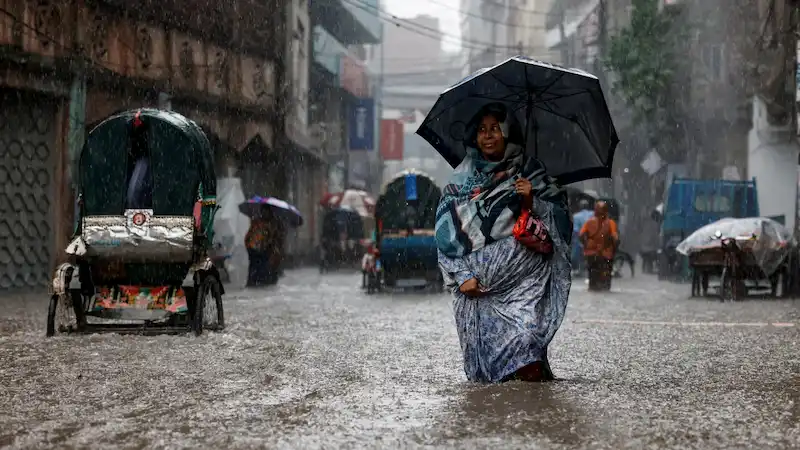


Extreme heatwaves and flooding pose a significant threat to the global fashion industry, potentially causing a loss of $65 billion in earnings by 2030, according to a recent study by Cornell University and investment manager Schroders. The research highlights that countries heavily reliant on garment production, such as Bangladesh, Pakistan, Vietnam, and Cambodia, are particularly at risk. These countries are projected to experience a 22% decrease in earnings from exports, leading to wider economic implications.
To mitigate the potential disruption caused by extreme weather, the study suggests that fashion brands sourcing from these countries should make necessary adjustments to work hours and ensure that employees have adequate rest and hydration. The adverse weather conditions are expected to negatively impact productivity, resulting in nearly 1 million fewer jobs being created collectively.
The four Asian countries selected for the study are major players in the fashion industry, accounting for 18% of global apparel exports and employing over 10.6 million manufacturing workers across 10,000 clothing and footwear factories. However, they are also highly vulnerable to the effects of climate change. Cities such as Dhaka, Phnom Penh, Karachi, Lahore, Ho Chi Minh City, and Hanoi already face extreme heat and humidity, with significant flooding also anticipated.
In Pakistan, for example, the country faced its worst floods in history last year, with more than one-third of the country being submerged. Similarly, heatwaves in Pakistan and Bangladesh have become more frequent, with temperatures soaring above 40°C (104°F) during the spring and summer.
By analyzing flood and temperature data, the Cornell and Schroders team estimated that without proactive measures, the fashion industry could face a cost of $65 billion by 2030. This cost projection was based on a "business as usual" scenario, assuming no actions are taken to address the impacts of heat stress and flooding. However, if factory owners take proactive measures to mitigate heat stress for workers, some of these projected losses could potentially be avoided.
The study's authors emphasize the importance of businesses and regulators treating extreme weather events as serious health hazards. They suggest providing paid leave and the right to suspend work to protect workers. The report also recommends that fashion brands consider assisting suppliers in relocating their facilities to lower-risk nearby locations.
While relocating entirely from these vulnerable locations might be tempting for businesses, the researchers caution that it could be challenging to replicate the large-scale capacity they currently benefit from in South and Southeast Asia. Instead, they urge brands to invest in improving working conditions and addressing the impacts of extreme weather, as manufacturers and workers face significant climate-related challenges that are often disregarded.
In conclusion, the fashion industry stands to suffer significant financial losses if it fails to address the threats posed by extreme heatwaves and flooding, particularly in countries heavily reliant on garment production. Taking proactive measures, such as adjusting work hours and relocating facilities, can help mitigate these risks and protect the livelihoods of millions of workers.