


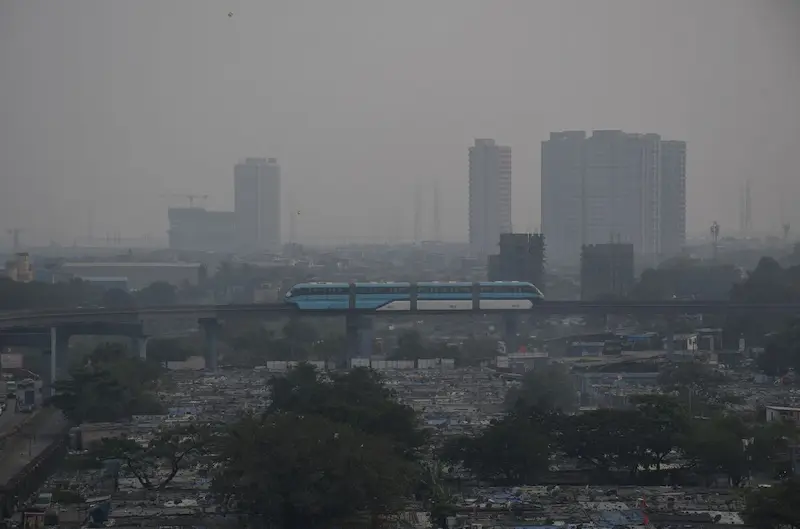


Mumbai, India's bustling coastal city, is grappling with surging levels of pollution, reaching levels comparable to the capital city of New Delhi on some days. The city's air quality index recently soared to 171, nearly 19 times higher than the annual air quality guideline set by the World Health Organization. The primary cause of this alarming pollution is attributed to large-scale construction projects that have exacerbated road traffic and released high levels of particulate matter 2.5, which is linked to severe health issues such as lung cancer and heart disease. The effects of climate change and unfavorable weather conditions have also contributed to the pollution crisis, according to the Brihanmumbai Municipal Corp.
In an unprecedented move to combat this pollution crisis, city authorities have implemented new measures to improve air quality. Construction sites are now required to be covered with 35-feet-high sheets to block dust, and sprinklers have been installed to dampen the dust at least four to five times a day. The city government has warned that failure to implement dust and pollution control measures may result in the shutdown of construction sites.
To further tackle the pollution problem, anti-smog machines are being deployed on major roads in the morning hours. These machines release a mist that helps weigh down suspended dust particles. While commonly used in Delhi, this is the first time Mumbai has employed such measures. Although these machines provide a temporary solution, experts suggest they are not the most effective long-term strategy for combating pollution.
Disturbingly, the consequences of air pollution in Mumbai have been dire. So far in 2023, air pollution has led to an estimated 29,000 deaths in the city and caused a loss of approximately $2.9 billion in productivity, according to calculations by IQAir and Greenpeace Southeast Asia.
Mumbai currently has around 6,000 active construction sites, largely related to the much-needed upgrade of the city's transportation network. These projects include the construction of a coastal road, a trans-harbor link, and a metro line connecting the southern island to the northern suburbs.
Authorities also attribute the worsening smog levels in Mumbai to changing weather patterns. The city has experienced unusually high temperatures for October, heavy showers leading to school closures, and dry spells during typically wet months in the state of Maharashtra, where Mumbai is located. As one of the world's most vulnerable cities to climate change-induced hazards, Mumbai faces challenges such as rising sea levels, storm surges, flooding, and coastal erosion.
Meanwhile, New Delhi's air pollution has also reached hazardous levels in recent days, with an air quality index well above 300. During October and November, northern India experiences poor air quality due to seasonal fires for agricultural purposes, exacerbating pollution from vehicles, construction activities, and coal-fired power plants. In response, Delhi's government has banned firecrackers during festive periods and plans to launch a campaign encouraging drivers to turn off their engines while waiting at traffic signals.
The simultaneous pollution crises in Mumbai and New Delhi highlight the urgent need for comprehensive actions and long-term solutions to address India's air pollution problem. These efforts must target not only the sources of pollution but also take into account the impact of climate change on air quality.