




Despite the slowdown in the global real estate market, luxury home sales continue to experience a mixed bag of results. According to real estate company Knight Frank, a total of 362 homes sold for over $10 million in 12 key global markets between July and September, marking a 2.4% decline compared to the same period last year. Although several prestigious cities, such as London and Singapore, saw a drop in super-prime home sales, there were notable exceptions, including Dubai, Geneva, and Hong Kong.
London, known for its prestigious and high-end properties, experienced a decrease in super-prime home sales. Only 51 ultra-luxury homes were sold in the third quarter, compared to 63 during the same period in the previous year. Similarly, Singapore recorded a decline in ultra-luxury sales, with only 13 properties sold compared to 34 in 2020. New York, another popular luxury real estate destination, also saw a drop in high-end home sales.
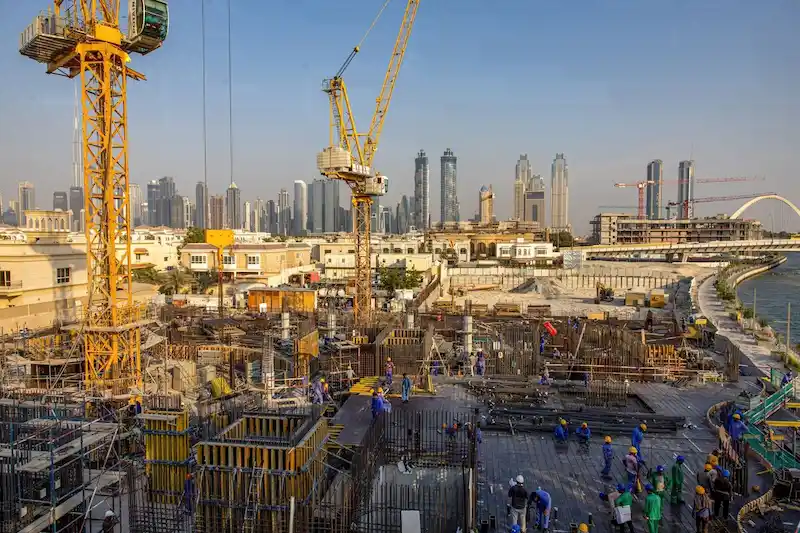
However, it's not all doom and gloom for the luxury home buyers. Dubai, a city renowned for its opulent and extravagant living, defied the slowdown trend. The emirate witnessed a remarkable increase in sales of homes priced over $10 million, with a total of 89 properties sold in the third quarter of this year. This is a significant jump from 58 sales reported during the same period in 2020. Likewise, Geneva and Hong Kong experienced an upswing in super-prime sales, providing a glimmer of hope for the luxury real estate market.
Despite the fluctuations in sales figures, it's important to note that the overall value of luxury sales remains impressive. In the last 12 months, the collective value of super-prime property purchases reached $31.7 billion, surpassing the $18.6 billion spent in 2019. However, this figure is still a decline from the post-pandemic high in 2021, which witnessed a total luxury sales value of $40.7 billion.
Liam Bailey, a researcher at Knight Frank, highlights the resilience of the super-prime sales market compared to other segments. He suggests that the recovery in travel and the completion of new luxury developments have contributed to supporting sales in this sector. However, looking ahead, Knight Frank predicts a further decrease in luxury home sales in the coming year, as the construction of fewer high-end properties adds to the scarcity of available options for affluent buyers.
While the global real estate market experiences a general slowdown, the luxury segment continues to navigate through a mixed landscape. Some iconic cities struggle with declining sales, while others, such as Dubai, Geneva, and Hong Kong, thrive against the odds. Regardless of the challenges faced, the luxury property market remains an attractive investment option, with impressive sales figures and demand from affluent buyers continuing to shape the industry's trajectory.