


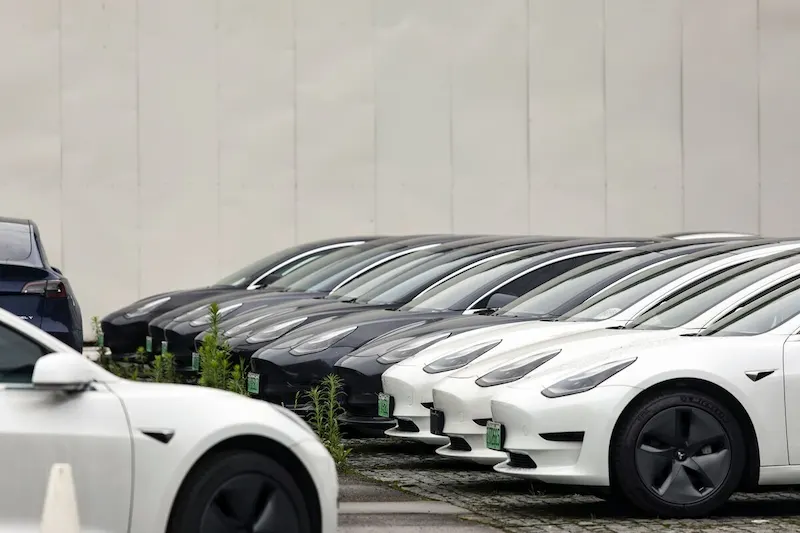


Tesla Inc. shares took a hit as the company slashed prices yet again in China, and announced disruptions at its European factory due to attacks in the Red Sea. The carmaker reduced the starting prices of its popular Model 3 sedan by 5.9% to 245,900 yuan ($34,300), and marked down the Model Y sport utility vehicle by 2.8% to 258,900 yuan. These price cuts come as Tesla faces increasing competition in China, with other manufacturers also driving down prices to defend their market share.
This is not the first time Tesla has reduced prices in China. Since late 2022, they have consistently adjusted their price tags, forcing other domestic and international automakers, such as Xpeng, BYD, and Volkswagen, to do the same. The intense competition and ongoing price wars are squeezing profit margins across the industry. However, despite the aggressive price cuts, less than one-third of local carmakers have been able to meet their annual sales targets.
Unfortunately for Tesla, the challenges in China are not the only ones they face. The company recently announced that it will be suspending most production at its Model Y plant near Berlin from January 29th to February 11th. This temporary halt is due to suppliers being forced to shift their transport routes following attacks on vessels in the Red Sea. These disruptions will impact Tesla's production capacity in Europe, adding to the current woes of the company.
Another factor playing into Tesla's recent stock decline is the overall slowdown in the growth of China's electric vehicle (EV) market. It is projected to decelerate for a second consecutive year in 2024, as the nation's sluggish post-pandemic recovery dampens consumer sentiment. The China Passenger Car Association predicts a 25% increase in shipments of battery-electric and plug-in hybrid vehicles to dealers this year, compared to 36% growth in 2023 and a whopping 96% surge in 2022.
Tesla sold 1.81 million vehicles worldwide in 2023, with over half of them produced in its Shanghai factory. While they achieved their annual delivery goal, BYD emerged as the top seller of battery-electric cars in the fourth quarter. The increasing competitiveness of Chinese automakers has narrowed the gap with Tesla significantly. UBS Group AG analyst Paul Gong highlighted this rapid progress, citing the speed at which Chinese companies have introduced new models and incorporated advanced technology.
In response to the headwinds, Tesla refreshed its Model 3 in September and is reportedly preparing to launch an updated Model Y by mid-2024. However, Chinese automakers have been more dynamic in introducing new models, with Xpeng launching five in 2023 and Li Auto planning to develop 11 models by 2025. This aggressive product strategy by local manufacturers poses a formidable challenge to Tesla's market dominance in China.
Tesla's German factory, which opened in March 2022, has the capacity to produce 375,000 vehicles per year. However, Tesla has taken a cautious approach and plans to gradually ramp up production at its Berlin and Austin plants to keep costs under control. This measured approach reflects the company's awareness of the challenges it faces in the increasingly competitive global EV market.
As Tesla grapples with price pressure in China, disruptions in its European factory, and mounting competition from local automakers, the road ahead appears rocky. The company will need to navigate these challenges strategically to maintain its position as a leading player in the global EV market.