


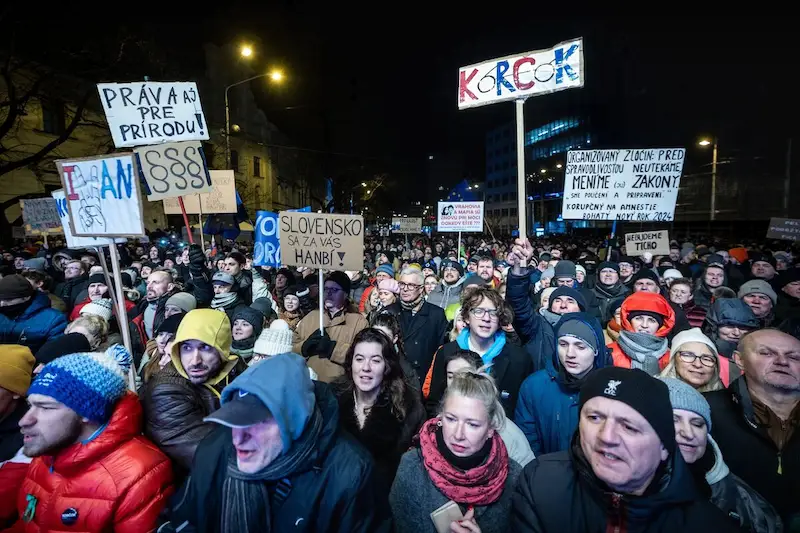


Thousands of demonstrators took to the streets across Slovakia to protest against a proposed overhaul of the country's judiciary by Prime Minister Robert Fico. The European Union has accused Fico of eroding democratic standards and the rule of law, making him the latest leader to face criticism for such actions. Fico's plans include a revamp of the penal code and the scrapping of a prosecutor's office tasked with investigating corruption and serious crime.
Fico, who has been in power since October, is facing mounting pressure from the public, the opposition, and the EU to scale back or abolish these plans. His alignment with Hungarian Prime Minister Viktor Orban, who has been involved in disputes with the EU over democratic backsliding, has further raised concerns. Fico recently pledged to shield Orban's government from potential repercussions within the EU.
The anti-government demonstrations in Slovakia have been escalating since Fico's cabinet announced its proposed reforms. Around 25,000 Slovaks gathered in the capital city of Bratislava for a rally, making it the largest in a series of protests in the country. Similar protests were held in other cities as well.
President Zuzana Caputova, a former human rights lawyer, expressed her concerns about the government's plans, calling the judiciary overhaul a "serious threat to the state's internal security." She urged the ruling coalition to subject the proposed bills to legislative deliberation instead of fast-tracking them. Caputova believes that the changes would weaken the state's ability to protect its citizens and enforce justice, potentially leading to a departure from the rule of law.
Fico's proposed legislation has faced obstacles in parliament as the opposition has been using procedural obstruction to delay its approval. Fico argues that the reforms will align local laws with those of other European states and reduce political bias in legal proceedings. The proposed changes also include lower sentences for economic crimes and shorter periods for statute of limitations.
Last month, the EU Public Prosecutor's Office stated that the judiciary overhaul would seriously impact its ability to investigate and prosecute offenses in Slovakia and would significantly decrease the level of protection for the bloc's financial interests.
Fico's previous stint in power was marred by national outrage over the murder of an investigative journalist who was covering corruption. If the amended laws are approved, several high-profile investigations and trials would be halted, and some cases involving former state officials and individuals linked to Fico's past governments would be reclassified to less serious offenses.
While the ruling coalition has signaled a willingness to make some concessions in the judiciary overhaul, Parliamentary Speaker Peter Pellegrini emphasized that lawmakers would not approve bills that impede the fight against the most serious crimes. The situation remains tense, with the fate of the proposed reforms yet to be decided.