


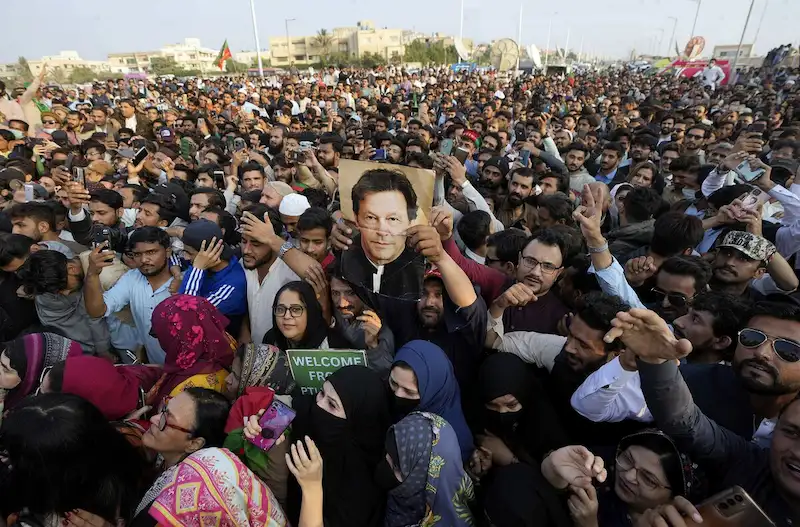


Pakistan was hit by an unexpected internet disruption that left popular social media platforms including Facebook, YouTube, Twitter, and Instagram inaccessible. The outage coincided with a virtual election rally held by Imran Khan's party, the Pakistan Tehreek-e-Insaf party (PTI). Party members quickly condemned the incident, viewing it as an attack on freedom of speech. However, a spokesperson for Pakistan's telecom authority claimed to be unaware of the situation.
The timing of the disruption is particularly significant as candidates for Khan's party have just begun campaigning for the upcoming general election scheduled for February 8th. Due to a Supreme Court ruling against the party, the candidates are running as independents. This has put the PTI at a disadvantage, and they believe that the internet outage further undermines their fair pre-election treatment.
This is not the first time such an incident has occurred. In early January, during a virtual fundraising drive organized by the PTI, a similar internet outage disrupted the proceedings. The recurrence of these disruptions raises concerns about the fairness and integrity of the electoral process in Pakistan.
Internet users across the country started experiencing the breakdown on Saturday evening. Nayatel, an internet service provider based in Islamabad, issued an audio message to its customers, explaining that the disruption was being carried out under the instructions of Pakistani authorities. The motives behind these instructions remain unclear.
Imran Khan, a former cricket star and the leader of the PTI, has been facing numerous legal challenges. He is currently serving a jail sentence, with more than 170 cases filed against him. Khan has been barred from contesting elections for a period of five years after being convicted in a corruption case last August. The PTI leader maintains that these cases are politically motivated.
Given the circumstances, many are questioning the fairness and impartiality of the electoral process. The PTI's struggle for equal treatment highlights concerns about political influence on Pakistan's internet connectivity and the potential for disrupting political rallies. As the general election draws nearer, it remains to be seen whether these internet outages will impact the outcome, or if measures will be taken to ensure a fair and transparent electoral process.