


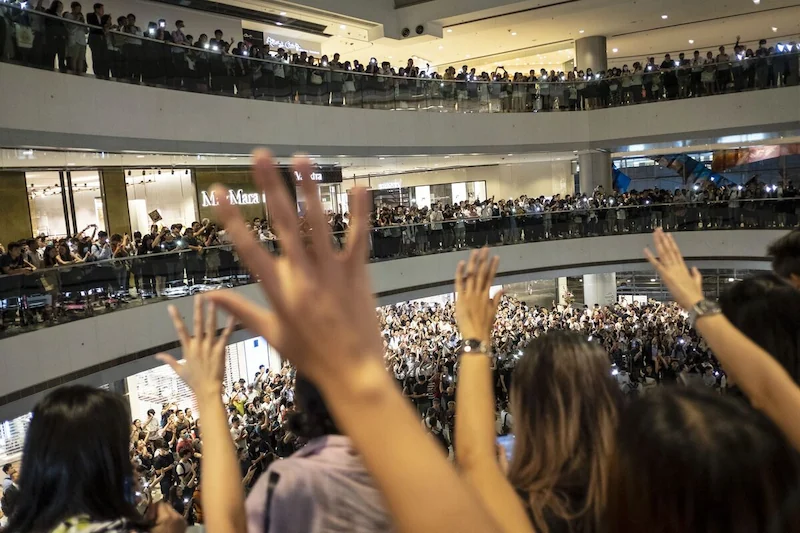


In a move that is sure to raise concerns about the state of free speech in Hong Kong, a court has granted the government's request to ban the popular protest song "Glory to Hong Kong" when used with criminal intent. This decision by the Court of Appeal overturns a previous ruling and allows the government to prohibit the song for national security reasons. The song, which gained popularity during the anti-government protests in 2019, has now been deemed off-limits for anyone looking to incite secession or insult the national anthem.
The Court of First Instance had previously denied the government's request for an injunction in July, citing concerns about the potential chilling effects of such a ban. However, the government challenged this decision, arguing that the ban was necessary to safeguard national security. The appeal court, in its ruling, emphasized the importance of balancing free speech rights with the need to prevent criminal activities. While acknowledging the duty to protect free expression, the judges deemed the ban justified, stating that free speech is not a license to commit criminal offenses.
The ruling raises questions about compliance for internet companies operating in Hong Kong. The injunction prohibits the distribution or playing of the song with seditious intent, potentially impacting platforms like Google, Spotify, Apple, and Meta. While it remains unclear how these companies will respond to the ruling, the Asia Internet Coalition, which represents major tech firms, has expressed concerns about the impact on a free and open internet in the city.
The case also highlights broader censorship concerns and the dilemma faced by tech companies operating in Hong Kong. The pressure to comply with government demands could force these companies to choose between respecting free speech principles or risking their businesses in the city. If tech firms decide to exit the market, it could have far-reaching implications for Hong Kong's internet landscape and its reputation as a hub for innovation and technology.
Human rights lawyer Mark Daly emphasized the uncertainty surrounding the injunction, noting its broad and complex nature. As challenges to free expression persist in Hong Kong, the court's decision to uphold the ban on the protest anthem signals a potential shift towards tighter controls on dissent and raises important questions about the future of free speech in the city.