




European nations are shifting towards a more stringent approach towards China, which is more in line with the strategy championed by the US. Countries such as Germany and Italy are studying export and investment controls adopted by the US, following the example of the Netherlands. The main driver behind this shift is China's continued alliance with Russia despite the invasion of Ukraine, along with its perceived aggression overseas and against its own people. This is a significant change for a continent that previously resisted the US push to unwind economic ties with China. However, the ongoing conflict in Ukraine has left Europe feeling vulnerable, leading to a growing frustration towards the leaders of the world's second biggest economy.
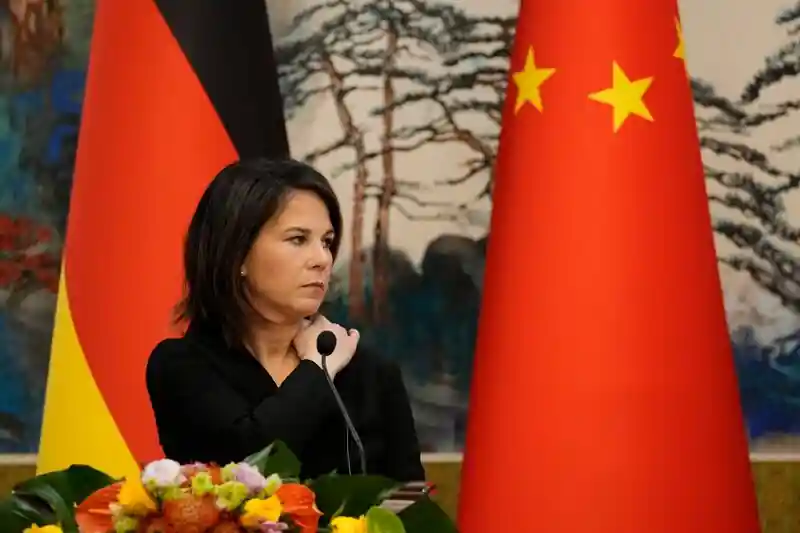
Senior officials who previously had been wary of speaking out against Beijing are now making far more critical public comments. German Foreign Minister Annalena Baerbock recently called China a "partner, competitor and systemic rival". She expressed concern that the systemic rival aspect is growing ever stronger, not only because China is behaving more aggressively externally but also more repressively domestically. She called Chinese actions both at home and abroad "more than shocking".
The US and the EU are developing tools to slow China's progress in fields such as semiconductors and defense. The allies are discussing export controls, tighter screening of investments, and increased cooperation on critical materials. German Chancellor Olaf Scholz has been in close talks with the US on the issue, and Italy is looking at ways to limit the influence of China's Sinochem on tire maker Pirelli SpA.
These changes will please President Joe Biden's administration, which has sought to present a united front with allies and spread the burden of the inevitable economic consequences that will come with more confrontation. The US National Security Advisor Jake Sullivan said that burden sharing when it comes to taking some economic hit to protect national security is what makes alliances function effectively.
China and economic security will be the main topics when G-7 leaders meet in Japan next month. There seems to be broad agreement on the need to reduce risks but not break completely. Momentum is growing for a way to coordinate a reaction against economic coercion without doing anything automatic. However, there are notable caveats to the approach, and European countries want to make sure that there isn't a decoupling from the Chinese market. Like the US, they want to reduce risk in sensitive areas, including quantum computing, biotechnology, and critical minerals.
Overall, the change in approach towards China among European nations reflects a growing sense of vulnerability and frustration towards the leaders of the world's second biggest economy. The EU's over-reliance on Russian oil and gas, combined with the painful process of diversifying its energy sources following Moscow's invasion, has forced the bloc to rethink its policy of engaging with autocratic countries. European Commission President Ursula von der Leyen and Biden have shared concerns about economic coercion and non-market policies and practices. The invasion of Ukraine by Russia has also sharpened European perceptions of how geopolitical risk matters for the economy. China's backing for Russia has heightened the sense of China as an ideological and security threat.