


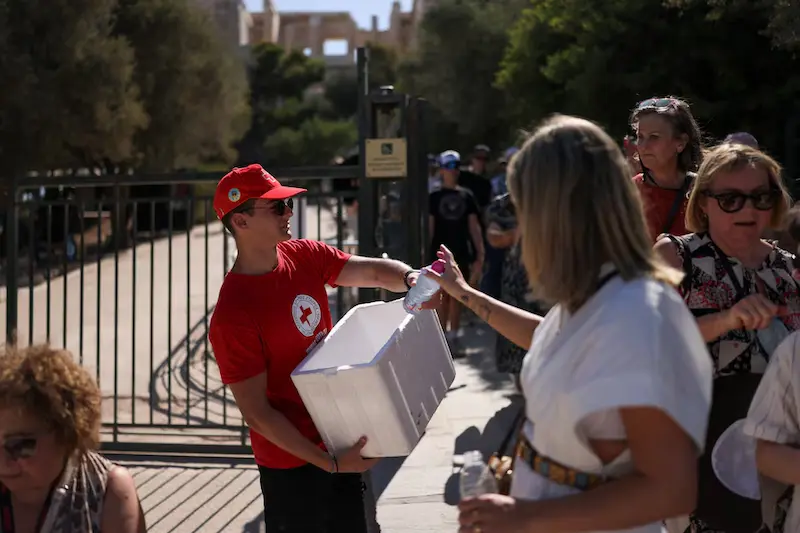


It felt like the sun had moved closer to Earth. Streets shimmered under the weight of the heat, shadows disappeared by noon, and every breath carried the weight of a summer that simply refused to let up. In just ten days — ending July 2 — the relentless heatwave that swept across parts of Western Europe quietly claimed the lives of around 2,300 people across 12 cities. Most didn’t die dramatically. They simply stopped coping.
You might not have heard about it, not in full. Death by heat isn’t loud. It doesn’t come with sirens or drama. People just fade — older folks struggling with already fragile bodies, those living alone, the poor who can’t afford air conditioning, or the ones whose jobs tie them to the sun.
In Spain, the heat hit 40°C (104°F). That kind of temperature doesn’t just make you sweat; it turns ordinary activities into survival tests. In France, wildfires flared up again, as if the earth itself had grown short-tempered. A study released Wednesday — by scientists from Imperial College London and the London School of Hygiene and Tropical Medicine — linked 1,500 of the 2,300 heat-related deaths directly to climate change. Think about that. Over half of these lives were lost, not just because of a hot spell, but because our climate is changing in ways we’re still not fully equipped to handle.
The cities studied — places like Madrid, London, Milan, and Barcelona — aren’t strangers to summer heat. But what’s changed is the intensity. Climate change didn’t invent heatwaves, but it’s like adding fuel to the fire. Temperatures in these cities soared up to four degrees Celsius higher than they would have been without the influence of human-driven global warming.
Dr. Ben Clarke, one of the researchers, said it clearly: “Climate change has made it significantly hotter than it would have been, which in turn makes it a lot more dangerous.” And when it gets that hot, danger doesn’t announce itself. It waits quietly — in stuffy apartments, on asphalt playgrounds, behind hospital curtains.
The scientists behind the study didn’t have official death certificates linking each case to heat. That’s the problem — many heat deaths go uncounted or unrecognized. So, they used past data, modeling, and historical health patterns to estimate what the real toll likely was. It’s not a perfect science, but it paints a clearer picture than silence.
This is part of a broader, alarming trend. According to the EU’s Copernicus Climate Change Service, this past June was the third-hottest ever recorded on Earth. Only 2023 and 2024 were hotter. And if that sentence makes you blink — yes, it means we’re breaking records every single year now.
Back in 2022, researchers estimated that 61,000 people died from Europe’s summer heatwaves. Sixty-one thousand. That’s not a future threat. That’s already happening.
The source of the heat's growing ferocity? Greenhouse gases — mainly from burning fossil fuels — are thickening in our atmosphere. They act like a heavy blanket over the planet, trapping more warmth, raising baseline temperatures bit by bit. And when a heatwave rolls in, that warmer baseline turns the dial way higher than it used to.
There’s no dramatic ending here. Just a quiet accumulation of loss, often unnoticed. People passing in hospital beds, at home, alone — their stories buried under temperature charts and forgotten forecasts. What’s left is a lingering question: how much more heat can we take, and who pays the price when we don’t prepare for it?