


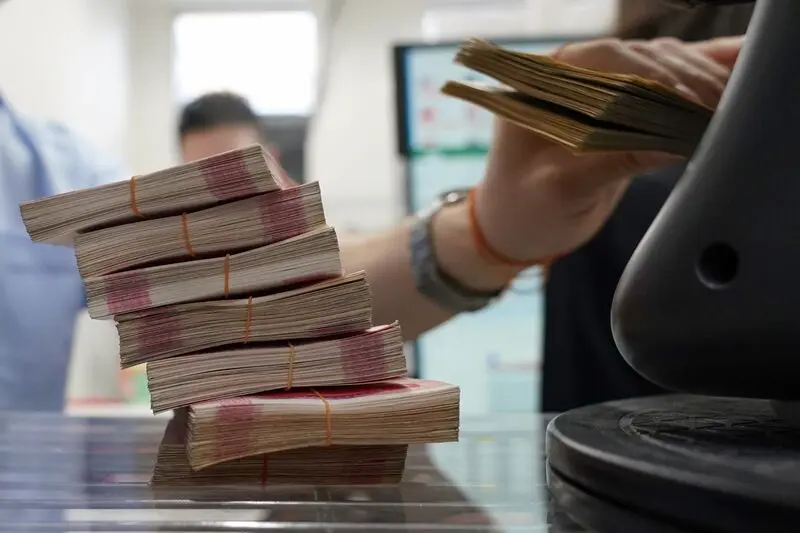


As per the semiannual report released by the US Treasury, China and six other major economies have been placed on its "monitoring list" for their currency practices. However, the report refrains from designating any trading partner as a foreign-exchange manipulator. The report is aimed at pressurizing those countries who are suspected of artificially holding down exchange rates to gain competitive advantage to stop such activities.
US Treasury Secretary, Janet Yellen noted that most foreign-exchange intervention by US trading partners last year was in the form of selling dollars, actions that helped to strengthen their currencies. Nevertheless, the Treasury remains watchful of countries' currency practices and policy settings and their consistency with global growth that is strong, sustainable, and balanced.
According to the report, no major US trading partner manipulated the rate of exchange during the four quarters through December 2022, and none met all the three criteria for being designated as manipulators. The Treasury stated that Switzerland exceeded one of the three criteria, and the department would perform an in-depth analysis of Switzerland until it no longer meets any of the three criteria.
The seven major economies that were named in the Treasury's monitoring list are China, South Korea, Germany, Malaysia, Singapore, Switzerland, and Taiwan. Japan, which was on the monitoring list in the November report, has been dropped from the list.
The Treasury also reiterated its call for increased transparency in China's exchange-rate policy, despite China's central bank governor, Yi Gang, stating in April that the yuan was primarily market-determined. Nonetheless, the department said that the broader lack of transparency around critical features of China's exchange rate mechanism and its failure to publish foreign exchange interventions makes China an outlier among major economies and justifies closer monitoring by the Treasury.
The department stated that the US looks at the persistence of intervention when scrutinizing Japan's currency practices during 2022 to cushion the yen's decline. In large and freely traded exchange markets, intervention should only be made in extreme circumstances and in consultation with Group of Seven partners, a Treasury official told reporters at Friday's report call.
The Treasury is required to produce the report under the 1988 Omnibus Foreign Trade and Competitiveness Act and the 2015 Trade Facilitation and Trade Enforcement Act, aimed at addressing concerns that US trading partners might artificially weaken their currencies to gain a competitive advantage in trade.
The labelling of a manipulator has no immediate consequence or specific penalty, but the law requires the administration to engage with those trading partners to address the perceived exchange-rate imbalances. The exclusion from US government contracts could be among the penalties applied after a year if the label remains.
In 2019, the Trump administration labelled China as a manipulator and later withdrew the tag after five months, achieving concessions in a trade deal. The label was applied to Switzerland and Vietnam by the Trump administration in 2020 and removed by the Biden administration in 2021.
So far, the Biden administration has not designated any US trading partner as a manipulator.