


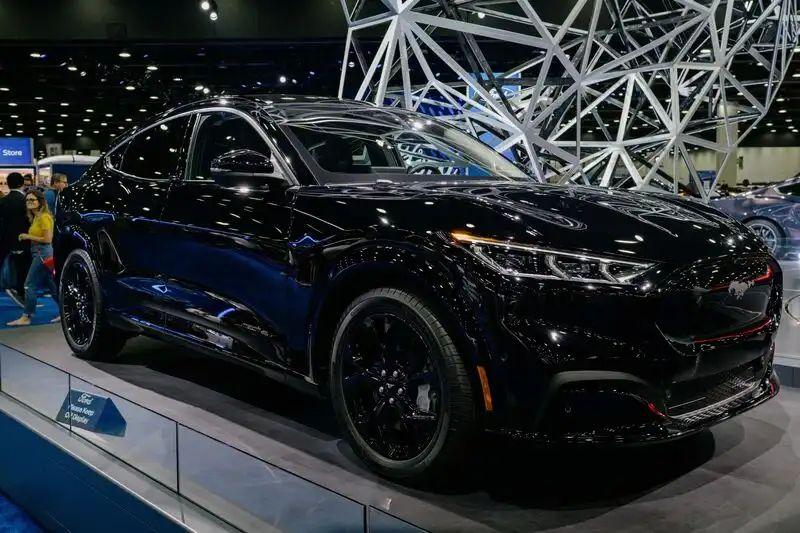


Ford Motor Co. experienced a 2.8% decrease in its US electric vehicle (EV) sales during the second quarter, as it lagged behind competitors Tesla Inc. and General Motors Co. One of the main contributing factors to this decline was the temporary closure of Ford's Mexican factory, which manufactures the battery-powered Mustang Mach-E.
In the three months leading up to June, Ford sold 14,843 EVs, compared to 15,273 during the same period last year. However, the company reported an overall increase of 9.9% in light-vehicle sales, driven by strong demand for its F-Series pickup trucks and Escape SUVs.
The production pause at the Mach-E plant in Cuautitlan, Mexico, took place in January and February in order to double its capacity. Ford noted that the inventory levels recovered towards the end of the second quarter once the factory operations resumed. This led to a significant boost in Mach-E sales, which surged by 110% in June.
Despite its recent decline, Ford had outperformed General Motors in EV sales last year to secure the second position after Tesla, which currently dominates approximately two-thirds of the US market for battery-powered vehicles. In the second quarter, General Motors sold 15,354 EVs, closely followed by Hyundai with 14,348 EV sales.
Ford's sales analyst, Erich Merkle, explained that the capacity actions taken earlier in the year for the Mustang Mach-E had impacted inventory flow, but their supply situation began to improve in Q2. EV sales accounted for 2.8% of Ford's total sales volume during the quarter.
It is worth noting that Ford is projecting a $3 billion loss in its EV business for this year as it invests $50 billion in the development and manufacturing of its electric models. The automaker has set an ambitious target of producing 2 million EVs annually by the end of 2026 and achieving an 8% return on investment before interest and taxes.