


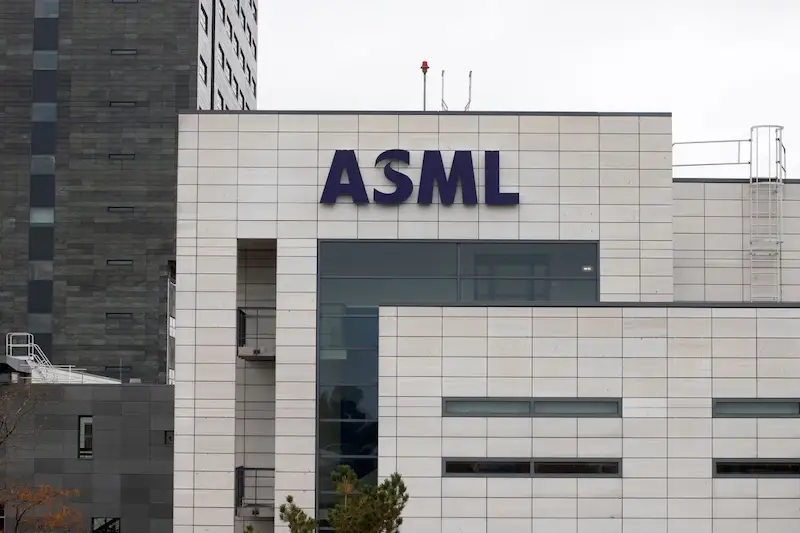


ASML Holding NV, the leading provider of chipmaking equipment, is now facing tighter restrictions on its cooperation with Chinese customers, further fueling the ongoing technology clash between Washington and Beijing. Under the new regulations published in June by the Dutch government, ASML will be prohibited from maintaining, repairing, and providing spare parts for controlled equipment without prior approval. This is in addition to the restrictions that will take effect in September, which prohibit ASML from shipping certain advanced immersion deep ultraviolet lithography machines to China without a license.
The United States is also expected to impose restrictions on ASML, preventing the company from selling older DUV lithography gear to several Chinese plants, including one operated by Semiconductor Manufacturing International Corp. (SMIC), a leading chip company in China. The US restrictions will require approval from Washington for any such sales.
These dual restrictions pose a significant challenge for Chinese semiconductor companies and could potentially hamper their capabilities over time. The Chinese government has strongly reacted to these technology curbs, filing a complaint with the World Trade Organization and accusing the US of attempting to keep China subservient.
By implementing these regulations, the Netherlands sends a clear message that it does not want China to be able to produce the most advanced semiconductors. The impact on Chinese chip companies could be substantial, as they would face a disadvantage in the global market for advanced logic and memory chips. Access to these advanced ASML machines is crucial for the development of cutting-edge process technologies, and without them, Chinese chip companies may be forced to delay or cancel certain projects.
It is worth noting that ASML has never been able to sell its most advanced chipmaking machines to China due to concerns about potential military applications. These machines use extreme ultraviolet (EUV) lithography, a technology that the US and its allies have controlled access to.
The Biden administration plans to impose the new restrictions on ASML by utilizing the Foreign Direct Product Rule, which allows limitations on foreign equipment suppliers' sales if their products contain even a small amount of American components. This approach follows the previous use of the rule by the Trump administration, which aimed to curb Huawei's access to US-based tech companies.
Besides the sales restrictions, the US may also prohibit ASML from providing maintenance, repair services, and spare parts for the restricted machines installed at the targeted Chinese plants without obtaining a license.
While the Netherlands initially resisted US efforts to enforce extraterritorial controls on ASML, the governments of the US and the Netherlands have reached an understanding regarding the national security concerns and the necessity of these additional restrictions. Despite the recent collapse of the Dutch coalition government, these regulations are not expected to be affected.
Overall, these new controls by both the US and the Netherlands are aimed at deterring China from enhancing its semiconductor technology and may also have long-term implications for Chinese chip companies' existing production capacity. The lack of domestic alternatives for repairing or replacing broken foreign equipment could hinder their ability to keep up with technology advancements. ASML, with its near-monopoly in critical lithography gear, plays a crucial role in the production of advanced and legacy chips worldwide.
Representatives for the Dutch government, the US Department of Commerce, and ASML have declined to comment on these developments. Meanwhile, ASML announced plans to scale back its hiring this year due to industry slowdown and a significant recruitment drive scheduled for 2022.