


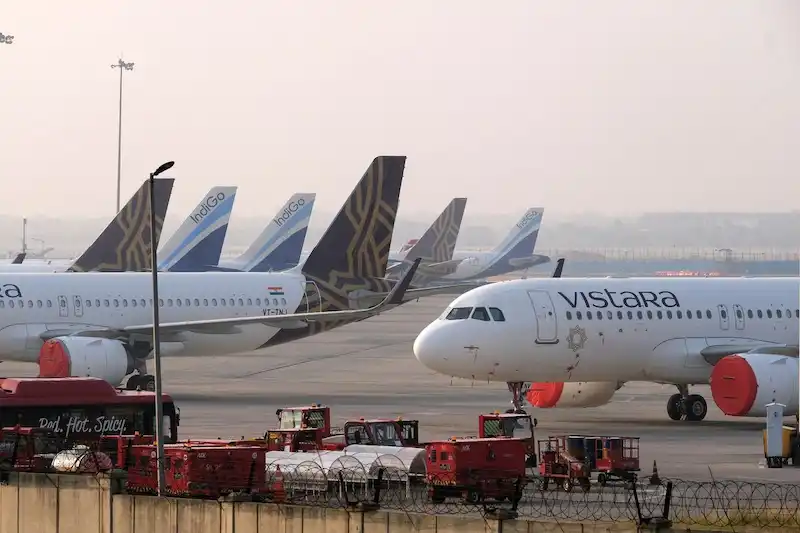


India's Vistara airline has begun the process of merging its staff with Air India Ltd., as part of the Tata family's strategy to rebuild its aviation empire and compete with market leader IndiGo. Vistara's CEO, Vinod Kannan, confirmed that the integration of staff has commenced and expects the regulatory clearances to be completed by April 2024. This comes after reports of Indian regulators expressing antitrust concerns about the merger.
Vistara, currently co-owned by Tata Group and Singapore Airlines, will be absorbed into Air India as part of a deal announced in November. This move gives the Tata family more strength to take on IndiGo, the dominant budget carrier in the country. Singapore Airlines will receive a 25.1% stake in the combined entity, in exchange for its interest in Vistara and a $250 million investment.
The Tata Group has a long history in the aviation sector, having founded Air India's predecessor in the 1930s and subsequently taking over the national flag-carrier again in 2022. Since then, the conglomerate has been focused on rebuilding the company, placing record aircraft orders alongside IndiGo.
Vistara has formed a team to discuss the final structure of the integrated organization, with the aim of creating a seamless operational entity. However, due to competition law restrictions, the details of this structure cannot be disclosed at this time. The airline is conducting discussions with pilots and cabin crew regarding the merger process, and they are also applying to competition authorities in Singapore.
Kannan revealed that India's antitrust regulator has issued show-cause notices expressing concerns about the merger. However, he believes that the control of 63% of the domestic market by IndiGo is a more significant issue than the potential duopoly arising from the consolidation. Currently, Air India holds a 9.7% market share, while Vistara has 8%.
The combined airline will carry the name of Air India, and plans have been made to discontinue the Vistara brand. Vistara, which currently operates a fleet of 61 aircraft, including Airbus and Boeing planes, aims to expand its capacity to destinations such as Dubai, Bali, and Bahrain by the time the merger is completed. The company plans to have a fleet of 70 aircraft once the integration process concludes.