


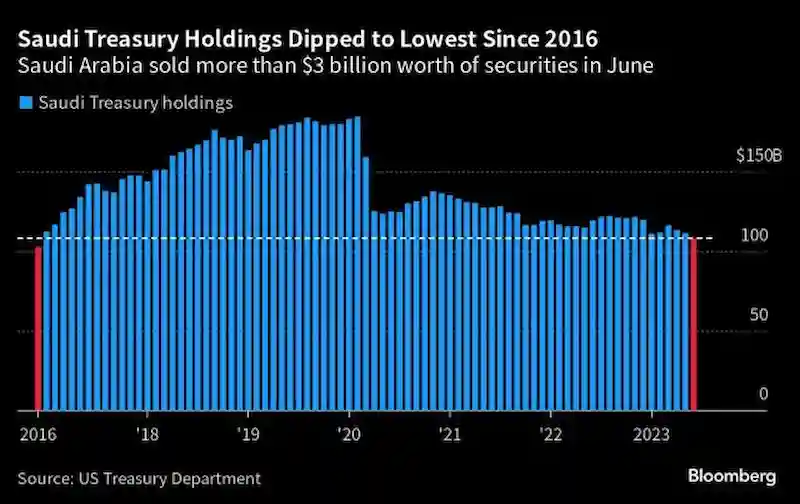


Saudi Arabia's stockpile of US Treasuries has reached its lowest level in over six years as the kingdom looks to diversify its investments and allocate more of its oil wealth to riskier assets. In June alone, Saudi Arabia sold over $3 billion in US government debt, marking the third consecutive month of offloading these securities. The neighboring United Arab Emirates also sold nearly $4 billion worth of US Treasuries during that same period.
The decision by the Arab Gulf region's petrostates to reduce their exposure to US government debt reflects a broader trend of seeking higher returns beyond the traditional reliance on the US dollar. For Saudi Arabia, this has meant exploring alternative investment opportunities, such as holdings in companies like Lucid Group Inc., Uber Technologies Inc., and even ownership of the Newcastle United football club.
Bloomberg Economics estimates that around 40% of Saudi Arabia's external wealth is now allocated to riskier assets, doubling since 2016 when the country expressed its intentions to invest in sectors beyond oil. This shift is also evident in the Saudi sovereign wealth fund, known as the Public Investment Fund, which increased its holdings of US-traded stocks by almost 10% to approximately $39 billion in the second quarter.
The move away from US Treasuries is not exclusive to the Gulf states. In June, China sold $11.3 billion of US government debt, bringing its holdings to the lowest level since mid-2009. In contrast, countries like Japan and the UK have been among the biggest buyers of the perceived safe-haven asset.
As the world's largest oil exporter, Saudi Arabia has long been a key player in the petrodollar system, which relies on pricing crude exports in US dollars. However, recent developments indicate the kingdom's efforts to strengthen relations with crucial trade partners, such as China, and diversify its economy away from oil.
The redirection of oil revenues and the country's economic diversification efforts have prompted questions about how Saudi Arabia will allocate its wealth. Potential recipients include the National Development Fund, focused on infrastructure development, and the Saudi sovereign wealth fund.
It remains to be seen how these shifts in investment strategy will impact Saudi Arabia's economy and its ongoing discussions with the United States. These talks reportedly involve reaching a formal defense and security pact, alongside the normalization of ties between the kingdom and Israel. Overall, Saudi Arabia's reduced exposure to US Treasuries reflects its desire to pursue higher returns and diversify its investment portfolio in a changing global landscape.