


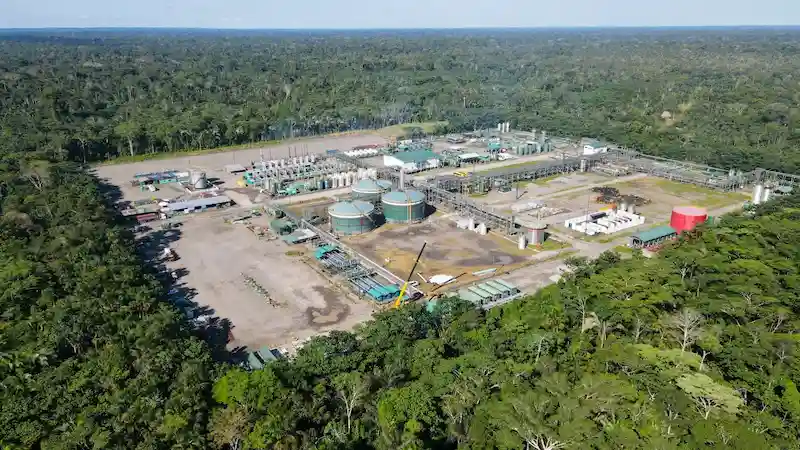


Ecuadorans Head to the Polls in Landmark Referendum on Amazon Oil Extraction. In an unprecedented move, the people of Ecuador are using their voting power to not only choose a new president but also to determine the future of oil extraction in the Ecuadorian Amazon. For the first time in history, a referendum will allow citizens to decide whether oil companies should continue drilling in the Yasuní National Park, an ecologically rich area and home to the last uncontacted indigenous communities in Ecuador.
Yasuní National Park spans approximately one million hectares at the convergence of the Amazon, Andes, and Equator. It boasts unparalleled biodiversity, with a single hectare purportedly housing more animal species than all of Europe and more tree species than exist in all of North America. However, beneath this pristine land lies Ecuador's largest crude oil reserve.
The call for this referendum follows a decade-long battle that began when former President Rafael Correa proposed an audacious plan: asking the international community for $3.6 billion to leave Yasuní undisturbed. Unfortunately, the response fell short of expectations, leading the Ecuadorian state oil company to commence drilling in Block 43 in 2016, which currently yields over 55,000 barrels of oil daily, accounting for roughly 12% of Ecuador's total oil production.
However, tireless campaigning and a successful petition by environmental collective Yasunidos have paved the way for this crucial referendum. In May, the country's constitutional court granted authorization for the vote to be included on the ballot of the upcoming election.
This decision holds significant implications for Ecuador's economy, with proponents arguing that ceasing oil extraction would result in dire job losses. Energy Minister Fernando Santos warns about potential economic damage, stating that the current oil production generates revenues of approximately $1.2 billion per year. He also dismisses claims of environmental harm caused by the drilling operations.
On the other hand, supporters of the "yes" campaign propose alternative solutions to fill the economic void that would result from the cessation of drilling. They emphasize the potential for eco-tourism promotion, the electrification of public transportation, and the elimination of tax exemptions. They contend that cutting subsidies to the richest 10% of the country would generate four times more revenue than oil extraction from Yasuní.
Pedro Bermo, the spokesman for Yasunidos, highlights the dual nature of this election. He states that while the political landscape is marred by violence and the continuity of established parties, the referendum brings hope, joy, and activism. Bermo remains optimistic about the outcome and the collective effort to safeguard the natural beauty of Yasuní.
Among the campaigners against oil drilling is Helena Gualinga, an advocate for indigenous rights hailing from the Kichwa Sarayaku community in the Ecuadorian Amazon. Gualinga views this referendum as a crucial opportunity for tangible change. She emphasizes the importance of the one-year deadline specified in the win scenario, which would oblige the state oil company to wrap up its operations in Block 43 properly.
Opponents of the referendum argue that meeting the one-year deadline for dismantling operations would be impractical. They suggest that scaling down oil extraction would be a more feasible approach.
The referendum takes place against the backdrop of soaring temperatures worldwide, with July 2021 declared as the hottest month on record. Additionally, the Amazon forest is approaching a critical tipping point that could have severe implications for the fight against climate change.
Antonia Juhasz of Human Rights Watch argues that Ecuador needs to transition from its dependence on oil and embrace a post-oil era. The contribution of oil to Ecuador's GDP has steadily declined from 18% in 2008 to slightly over 6% in 2021. Juhasz believes that the benefits of preserving the Amazon's integrity outweigh the advantages of maintaining reliance on oil, especially considering the costs of frequent oil spills and exacerbating the climate crisis.
"The Amazon is worth more intact than in pieces, as are its people," she asserts.
The outcome of the referendum will shape the future of Ecuador's economy and its commitment to environmental conservation. As voters cast their ballots, the world watches with anticipation, recognizing the significance of this moment for both the Ecuadorian people and the global movement to protect our planet's precious natural resources.