


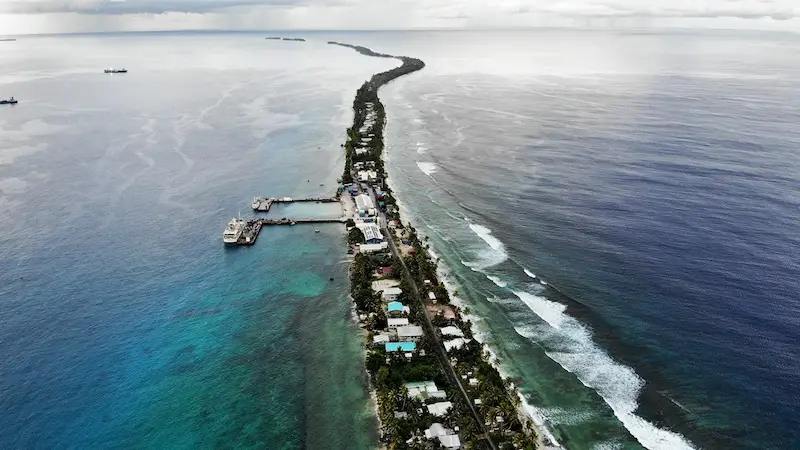


Prime Ministers Kausea Natano of Tuvalu and Gaston Browne of Antigua and Barbuda are set to present their case at the International Tribunal for the Law of the Sea in Hamburg, Germany. The leaders of these two small island nations, which are severely affected by rising sea levels, will seek an advisory opinion on the obligations of countries in combatting climate change.
The hearings at the international court will focus on whether carbon emissions absorbed by the ocean should be considered marine pollution, and what responsibilities nations have in protecting the marine environment. While the advisory opinion issued by the tribunal is not legally binding, it holds significant weight as an authoritative statement on legal matters pertaining to climate protection.
Representing the Commission of Small Island States on Climate Change and International Law (COSIS), Prime Ministers Natano and Browne will argue that countries have a duty to safeguard the marine environment as outlined in the UN convention on the Law of the Sea, which includes addressing greenhouse gas emissions.
The detrimental effects of excessive carbon pollution on the oceans are numerous, including coral bleaching and acidification. Moreover, low-lying island states such as Tuvalu and Vanuatu face the imminent risk of being submerged by the end of this century due to the gradual impacts of climate change.
Seeking legal clarity on nations' climate obligations, small island nations have turned to various courts. For instance, Vanuatu has led a campaign to request an advisory opinion from the International Court of Justice (ICJ) on countries' responsibilities in addressing climate change. The case was referred to the ICJ by the UN General Assembly in March, with the opinion expected to be delivered in 2024.
These island nations are determined to utilize international law as a means to address the injustice their people suffer as a result of climate change. By bringing their case to international courts, they aim to secure the necessary support and protection for their marine environments and ensure the future survival of their vulnerable populations.