




A year ago, Peter Gardner, a real estate developer in Louisiana, completed the renovation of a 144-unit apartment building. However, he was taken aback when the cost of insuring the property skyrocketed from the initial estimate of $75,000 to $175,000. Worse yet, when it was time to renew the policy, Gardner was shocked to learn that the new quote was over $300,000. Faced with these exorbitant insurance costs, Gardner has made the difficult decision to move his business out of Louisiana.
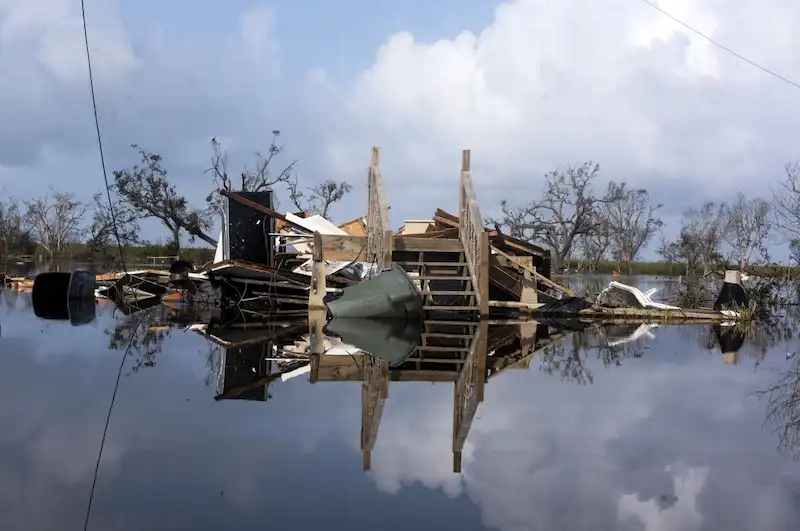
Louisiana has been hit hard by four hurricanes in 2020 and 2021, causing a staggering $23 billion in damages. As a result, the state is currently facing an insurance crisis that is not only impacting the economy but also leading to a population decline. According to James Donelon, commissioner for the Louisiana Department of Insurance, the crisis extends beyond property insurance to car and flood insurance as well. The rising costs have forced some residents to give up their homes and businesses.
Louisiana is not alone in experiencing insurance woes. States like Florida and California, which have been severely affected by climate change-induced natural disasters, are also facing rising rates. In fact, Florida has seen a tripling of insurance rates, with some wealthy individuals complaining of annual premiums exceeding $600,000. However, the impact is particularly severe in Louisiana, where the rising costs are more acutely felt due to the state's low average income.
The insurance affordability problem in Louisiana is largely rooted in climate change. The increasing frequency and intensity of hurricanes and rainstorms have made the situation untenable. Jesse Keenan, a professor of sustainable real estate at Tulane University, explains that climate change is not only causing direct losses from natural disasters but also driving up insurance, mortgage, and utility rates.
Louisiana currently ranks as the third most expensive state for property insurance, with an average annual cost of $5,353, three times the national average. The state has seen a significant number of insurers declaring insolvency, contributing to the spiraling insurance prices. Insurers have raised premiums by an average of 6.7% in 2021 and a staggering 18.5% in 2022, according to the Louisiana Department of Insurance.
Coastal Louisiana, which encompasses a significant portion of the state, has experienced even higher increases in property insurance rates. Many residents have struggled to find insurance coverage at all. Louisiana Citizens Property Insurance Corp., a state-backed insurer of last resort, has seen its policies skyrocket from 45,000 to 130,000 despite charging 10% above market rate.
The insurance burden extends beyond property insurance. Louisiana also has the highest car insurance rates in the nation, approximately three times the national average. Furthermore, flood insurance is becoming increasingly unaffordable, particularly for those in the poorest neighborhoods. Recent reforms to the federal flood insurance program, which previously offered subsidies, have resulted in substantial premium increases. As a result, a significant portion of the city's population may soon find themselves unable to afford flood insurance.
The impact of unaffordable insurance rates is already being felt by many individuals and families in Louisiana. Homeowners, such as Patrice Mimitte, are facing steep premium increases that can double or triple their mortgage payments. Low-income families are particularly affected and are desperate for solutions. Marguerite Oestreicher, executive director of the New Orleans Area Habitat for Humanity, reports receiving numerous calls from families seeking assistance.
The situation is dire, and many residents and businesses are grappling with the decision to leave the state due to the unaffordability of insurance. Louisiana's insurance crisis is a stark reminder of the devastating consequences of climate change and the urgent need for solutions to ensure the long-term sustainability and resilience of communities.