


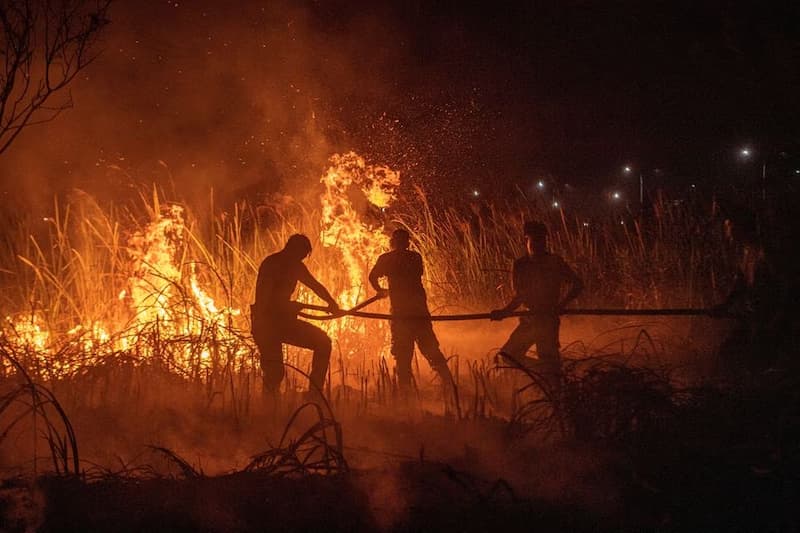


Singapore's air quality took a turn for the worse on Saturday as the city-state became shrouded in haze due to an upsurge in forest fires in neighboring Indonesia. The 24-hour Pollutant Standards Index readings in certain parts of Singapore reached above 100, indicating unhealthy air quality and advising people to limit outdoor activities.
The issue of transborder haze is a recurring problem in Southeast Asia, with Indonesia's slash-and-burn land clearing practices largely to blame. Loopholes in regulations make it challenging for authorities to completely eliminate these practices. On Friday, Singapore's National Environment Agency reported a significant rise in hot spots on Sumatra Island, a neighboring region of Indonesia popular for its palm oil and pulp and paper plantations. The number of hot spots detected reached 212, up from 65 the previous day.
The situation worsened on Friday afternoon when a temporary shift in wind direction blew some of the lighter haze towards Singapore, leading to a decline in air quality. As haze from the fires engulfed the city-state, concerns regarding health risks and the need for immediate action were raised.
Indonesia's response to the crisis involved various mitigation efforts. Helicopters were deployed to spray water over forest fires, while cloud-seeding was employed to induce rain. The country's environment minister denied that hazardous haze was crossing borders, emphasizing their efforts in tackling the fires.
This recent development comes after Malaysia called on Indonesia to take urgent action in addressing the fires within its borders due to the worsening air quality in Malaysia. The recurring issue of land clearing practices and forest fires in Indonesia has previously caused severe haze in multiple Southeast Asian countries, creating health hazards and emitting record levels of pollutants.
President Joko Widodo of Indonesia acknowledged the occurrence of wildfires across various regions, attributing them to extreme dry weather. However, he reassured the public that the current situation is much better compared to the devastating fires in 2015, which burned around 2.6 million hectares of land. To prevent further escalation, he urged authorities and local governments to extinguish fires promptly to prevent their spread.
In the meantime, Singaporeans are urged to take precautions and reduce outdoor activities due to the hazardous air quality caused by the transborder haze. Efforts to address the root causes of the fires and mitigate their impact on air quality continue to be a priority for all stakeholders involved across Southeast Asia.