




Hamas's meticulously planned assault on Israel took the country by surprise, thanks to a carefully orchestrated campaign of deception. Over the course of two years, Hamas kept its military preparations hidden while convincing Israel that it had no intention of initiating a conflict. By presenting an image of war-weariness and prioritizing economic incentives for workers in Gaza, Hamas successfully misled Israel, enabling them to launch an unprecedented attack.
To create a façade of non-aggression, Hamas went to great lengths to maintain the illusion of avoiding confrontation with Israel. They even constructed a mock Israeli settlement in Gaza, where their fighters trained and practiced military landings. Videos of these maneuvers were made, but Israel never suspected that Hamas was readying itself for an all-out assault.
Israel believed that by offering economic stability and job opportunities, it could maintain a level of calm in Gaza. It was a miscalculation. While Hamas appeared outwardly focused on economic concerns, it was secretly engaged in extensive military exercises and drills, fine-tuning its strategies.
Hamas deliberately restrained itself from launching military operations against Israel, despite provocations from other Gaza-based militant groups. This strategic decision drew criticism from some supporters but further contributed to the perception that Hamas was not interested in starting a new war. The movement's leader in Gaza, Yahya Al-Sinwar, also portrayed himself as preoccupied with managing Gaza rather than seeking to harm Israelis, further diverting attention away from Hamas.
The success of Hamas's deception plan was also due to its ability to avoid leaks. Many Hamas leaders were unaware of the true extent of the preparations, and even the 1,000 fighters involved in the assault had no inkling of the mission's ultimate objective.
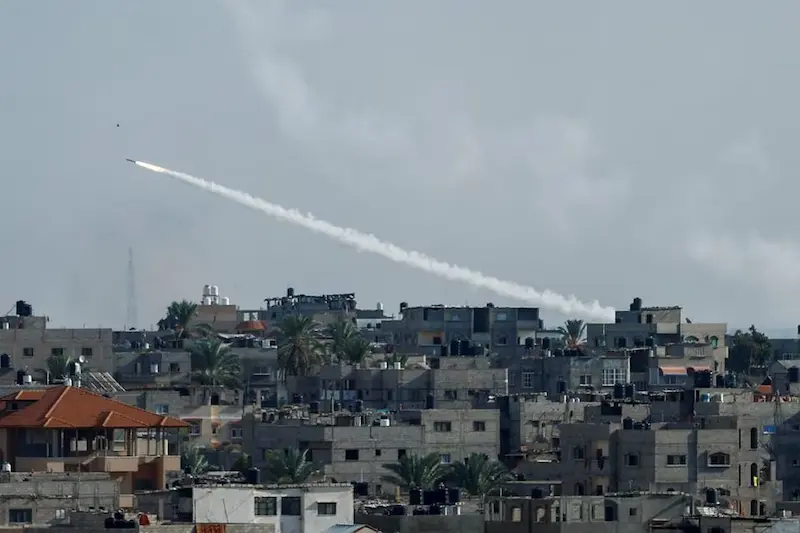
On the day of the attack, Hamas executed a well-coordinated operation comprising four distinct parts. Rocket barrages from Gaza were timed alongside incursions by fighters using hang gliders and motorized paragliders to breach the border. The grounded fighters then secured the area, allowing an elite commando unit to storm Israel's fortified electronic and cement wall. Using explosives to breach the barriers, the fighters then swiftly advanced on motorbikes, with bulldozers widening the gaps for additional forces.
Hamas's commando unit launched an attack on the Israeli army's southern Gaza headquarters, disrupting communication within the Israeli military. As a result, personnel were unable to contact commanders or coordinate effectively. Simultaneously, Hamas moved to take hostages, primarily achieving this early in the attack.
The audacity and precision of Hamas's assault left Israel reeling. The Israeli military was caught off guard due to redeployed troops in the West Bank to address rising violence with Palestinian militants. Additionally, the focus on normalizing relations with Saudi Arabia and containing tensions in the West Bank distracted Israel from Hamas's growing threat.
The surprise attack orchestrated by Hamas is being regarded as a massive failure of Israel's intelligence system and military apparatus in the south. However, Israeli officials have pledged to rectify this mistake and are determined to dismantle Hamas. The assault has galvanized Israeli determinati.