


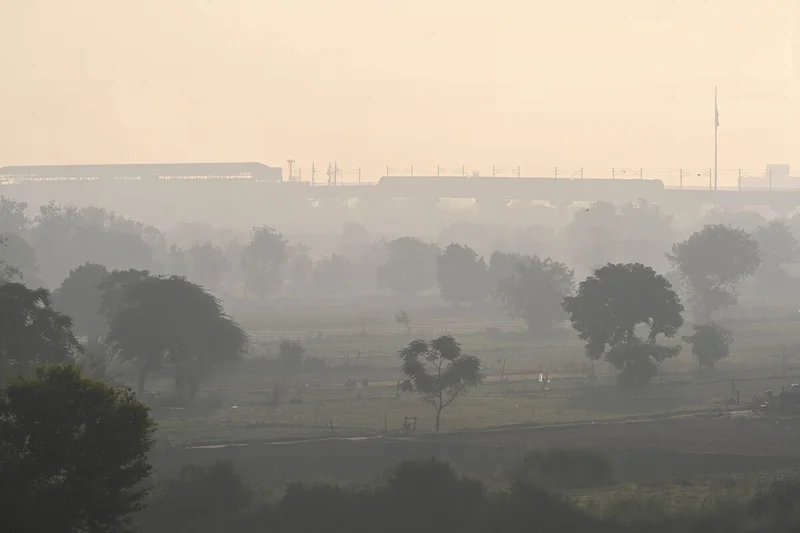


Delhi, the capital city of India, has recently gained a notorious distinction by recording the world's most toxic air. The air quality index in Delhi climbed to as high as 346, surpassing 110 other global cities tracked by Swiss company IQ Air. The same index in Mumbai rose to 177, indicating highly polluted air as well.
The main factors contributing to this alarming pollution level are the seasonal fires used to clear farmland, combined with emissions from vehicles, construction activities, and coal-fired power plants. A drop in temperatures and slow wind speeds further exacerbate the issue by impeding the dispersal of pollutants.
In addition to the high air quality index, Delhi also recorded a concentration of fine particulate matter (PM2.5) at a staggering 296 micrograms per cubic meter of air, almost 20 times higher than the World Health Organization's recommended level of 15. Exposure to such high levels of particulate air pollution can shorten the life expectancy of an average Indian by 5.3 years, according to a study conducted by the University of Chicago.
The Indian government, both at the central and state levels, has introduced several policies to combat air pollution. However, these efforts have so far proven to be ineffective in addressing the crisis. While there has been a significant decrease in agricultural fires in the areas surrounding Delhi over the past five years, other sources of pollution, such as construction activities and inefficient cooking stoves, are worsening due to population growth.
The power plants in the vicinity of the capital were mandated to install pollution control measures, but inadequate enforcement means that most of them have yet to comply. Analysts suggest that unless there is stricter regulation and greater compliance, the situation is likely to worsen. Sunil Dahiya, an analyst at the Centre for Research on Energy and Clean Air, emphasizes the need for better enforcement and regulation to address this pressing issue.
The toxic air in Delhi not only poses immediate health risks to its residents but also has long-term implications for their well-being. Urgent action is required to tackle the numerous sources of pollution, including the control of agricultural fires, stricter regulations on construction activities, and the implementation of cleaner energy solutions. Only through decisive measures can Delhi hope to improve its air quality and safeguard the health and longevity of its population.