


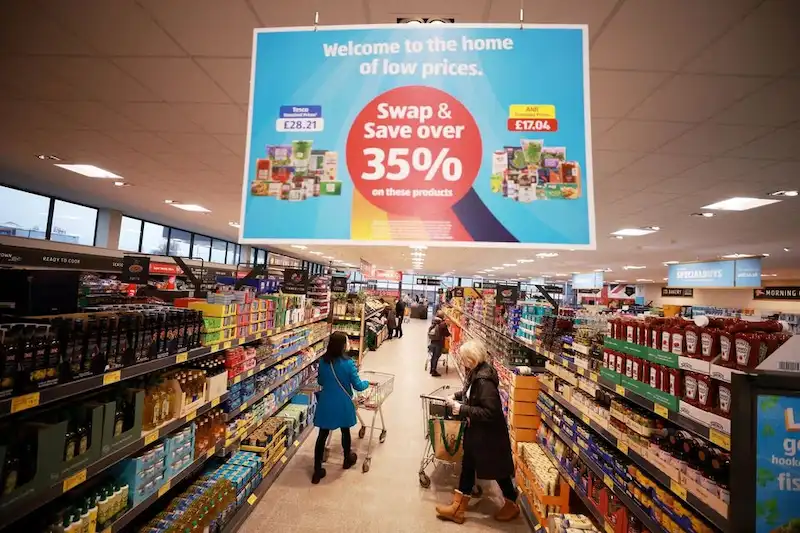


In a positive turn of events for consumers entering the crucial Christmas shopping period, British grocery inflation has fallen below 10% for the first time since July 2022. Market researcher Kantar reported that annual grocery inflation stood at 9.7% in the four weeks leading up to October 29, down from 11% in the previous month. While this decline is encouraging, Fraser McKevitt, head of retail and consumer insight at Kantar, acknowledged that consumers will still feel the pinch due to limited year-on-year price reductions in key categories like butter, dried pasta, and milk.
However, despite the overall downward trend, prices continue to rise sharply in certain markets including eggs, sugar confectionery, and frozen potato products. Kantar's data provides the most up-to-date snapshot of UK grocery inflation, while recent official figures showed that annual food inflation in September reached 12.1%, though prices did experience a month-on-month decline for the first time in two years.
Notably, all major supermarket groups in the country have reduced prices on essential products in recent months. For instance, Sainsbury's revealed that it had spent £118 million ($146 million) since March to keep prices down. Given that Prime Minister Rishi Sunak has promised to halve overall inflation by the end of this year, this downward trajectory in food inflation is closely monitored by consumers, the Bank of England, and lawmakers ahead of a possible national election in 2024.
In addition to the inflation figures, Kantar also disclosed that grocery sales in the four-week period leading up to October 29 had risen by 7.4% compared to the same period last year. Own label products saw growth of 8.0% during this period, though branded products trailed slightly behind at 6.7%. The study also highlighted that the proportion of sales through promotions had increased across all major retailers compared to the previous year, a phenomenon that has only occurred once in nearly a decade.
The report further revealed that spending on promotions reached 27.2% of total grocery sales, the highest level since last Christmas. Looking at broader consumer trends, a separate survey conducted by Barclays indicated that British consumer spending experienced its slowest pace of growth in over a year in the past month. This slowdown reflects consumers' concerns about the increasing cost of living in the lead up to the holiday season.
While the decrease in grocery inflation is a welcome development for consumers, the limited extent of price reductions in certain categories suggests that cost pressures may still persist. As shoppers navigate their way through the Christmas shopping period, retailers will need to strike a balance between offering attractive promotions and managing their margins effectively.