


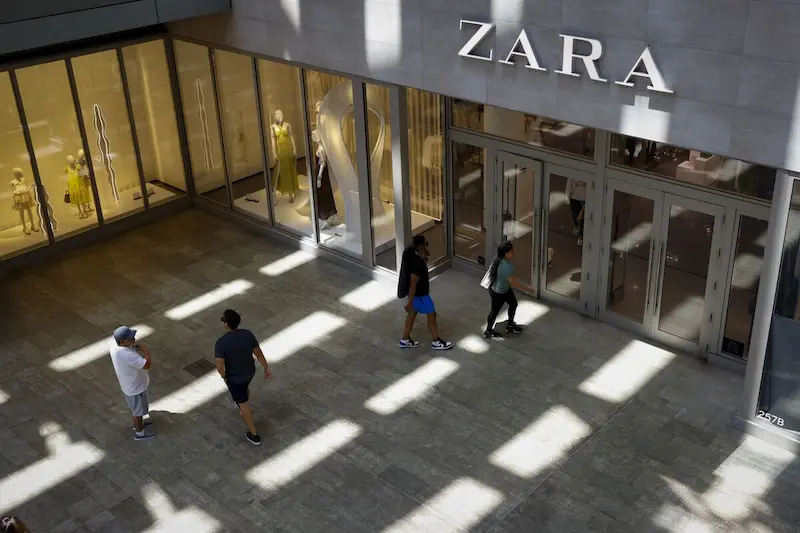


European clothing retailers Zara, Primark, and Mango are making strategic moves to expand their presence in the US interior. Traditionally focusing on coastal areas and the East Coast, these retailers are now targeting states with faster population growth in the south and west, such as Utah, Colorado, and Tennessee.
Zara, owned by Spanish company Inditex SA, considers states like Utah and Texas to be a "very relevant" demographic. They have recently opened stores in San Antonio, Texas, and Baton Rouge, Louisiana, following previous openings in Nashville, Denver, and Murray, Utah. These areas have seen significant population growth, with Nashville increasing by 24% and Denver by 13% in the last decade.
Similarly, Mango and Primark are also expanding their presence in the US interior. Mango has opened stores in Texas and Georgia over the summer, while two of Primark's new stores this year will be in Texas. The demographic shift reflects the demand created by population growth in these states, which were among the fastest-growing according to the 2020 US census.
Inditex, the owner of Zara, plans to open, refurbish, or enlarge at least 30 stores in the US by 2025. Additionally, they are considering introducing Zara Home and relaunching the Massimo Dutti chain in the US market. While the US has proven to be a challenging market for many European retailers, Inditex is optimistic about the resilience of US shoppers and their demand for the right products.
Similarly, Mango is experiencing growing demand for occasion-wear and casual styles favored by US shoppers. The retailer's decades-old presence in Latin America allows it to cater to the Latino population in the US. Mango currently has stores in Miami, New York, New Jersey, and has expanded to Texas, Georgia, and California this year.
The turn towards the US market comes as other markets, such as China and Russia, struggle for European retailers. Pruning store networks in China and exiting the Russian market have been necessary adjustments. However, Inditex now relies heavily on e-commerce in addition to its physical stores, with the US being its second-largest market, accounting for 19% of its sales.
While the US market may have initially posed challenges, both Inditex and H&M have eventually achieved significant success with their fast-fashion business models. In the case of Inditex, it took several years to achieve profitability in the US. The retailers now see an opportunity to cater to the strong demand of US shoppers, especially with targeted collections and a focus on the right product offerings.
Overall, the expansion of European clothing retailers into the US interior demonstrates the recognition of shifting demographics and the opportunities presented by faster population growth in these regions. This strategic move allows them to tap into new markets and meet the demands of US customers, ultimately contributing to their overall growth and success.