


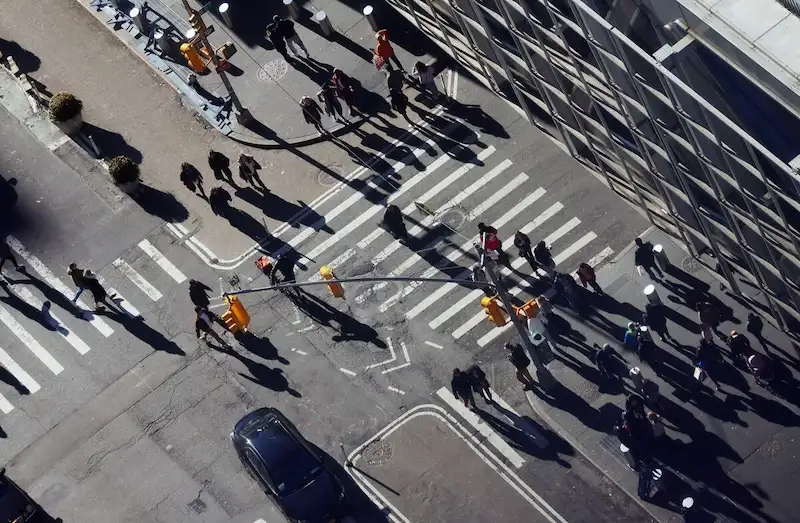


After a 14-year gap, the Manual on Uniform Traffic Control Devices (MUTCD), the recipe book for building roads in the US, has finally received an update. The Federal Highway Administration (FHWA) announced the release of the 11th edition of the handbook on Tuesday, addressing the changing transportation landscape, including the rise of electric vehicles and self-driving technology, as well as the alarming increase in pedestrian deaths on US roads.
The MUTCD, which has been in use since 1935, has often been criticized for prioritizing the efficiency of vehicular traffic over safety. In response to these concerns, the revised manual has been rethought to align with the Department of Transportation’s National Roadway Safety Strategy. The focus is now on implementing a “safe system” approach, similar to that used in EU countries, to significantly reduce traffic fatalities.
The update to the MUTCD is not merely a response to emerging technologies but also a shift towards addressing the needs of pedestrians and cyclists. The regulations now provide guidelines for sidewalk markings and bike infrastructure, including cycle lane designs and features like turn boxes. The bicycle information section has doubled in size, reflecting the growing importance of cycling in transportation.
FHWA Administrator Shailen Bhatt emphasized the inclusivity of the updated manual, which aims to make intersections safer and more welcoming for pedestrians. The new guidelines also emphasize intersection safety improvements, such as the installation of flashing beacons at crosswalks. Additionally, the manual introduces standard signage for indicating the location of electric vehicle (EV) charging stations, making it easier for EV owners to find charging points.
The update to the MUTCD was not a decision made in isolation. The FHWA actively sought input from state and local traffic engineers during the revision process and received over 100,000 public comments. This collaborative approach ensures that the manual reflects the needs and concerns of various stakeholders.
The news of the long-awaited update has been met with anticipation from many transportation advocates who have long been pushing for greater attention to pedestrian safety and alternative modes of transportation. The 14-year gap between updates highlights the need for a more frequent revision process to keep up with the rapid pace of transportation advancements. The Bipartisan Infrastructure Law, passed in 2021, mandates that updates to the MUTCD must now occur every four years, ensuring a more timely response to the evolving transportation landscape.
With the release of the 11th edition of the MUTCD, the US is taking a significant step towards creating a safer, more inclusive transportation system. By prioritizing pedestrian and cyclist safety, as well as addressing emerging technologies, the updated manual sets the stage for a transportation future that considers the needs of all road users.