


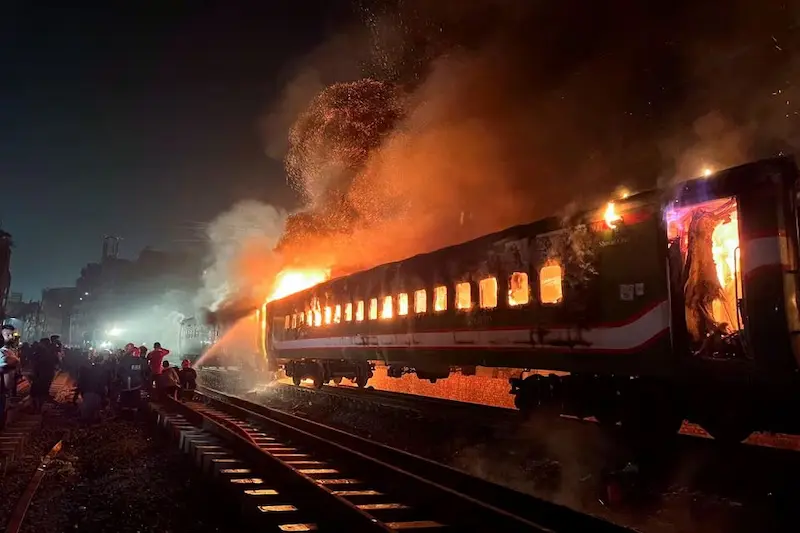


Violence erupted on the eve of Bangladesh's general elections as polling booths were set ablaze, while a train fire claimed the lives of four people, including two children. The government described the incidents as acts of arson targeting democratic values. The fire broke out on Friday evening aboard the Benapole Express train, injuring eight passengers as it spread to four compartments. The main opposition Bangladesh Nationalist Party (BNP) has called for a nationwide strike and urged people to boycott the election.
Foreign Minister A K Abdul Momen condemned the timing of the train fire, which occurred just a day before the election, stating that it was intended to hinder the democratic processes of the country. Momen called the incident "reprehensible" and promised that the authorities would bring the perpetrators to justice. Police revealed they had arrested a senior BNP leader and seven members of the party's youth wing in connection with the arson.
Since Friday evening, fourteen arson incidents have been reported, including the torching of eight educational institutions and one Buddhist monastery. The Chief Election Commissioner expressed disappointment over the BNP's absence from the election, stating that their participation would have made the poll more competitive. The boycott by BNP is its second in three elections, with the party accusing the ruling Awami League of trying to legitimize a sham vote.
Prime Minister Sheikh Hasina has refused the BNP's demands to step down and allow a neutral authority to oversee the election. She accuses the opposition of inciting anti-government protests that have plagued Dhaka and resulted in the deaths of at least 10 people since October. A senior BNP official, Ruhul Kabir Rizvi, blamed the ruling party for Friday's train fire, calling it an act of sabotage and cruelty.
On Saturday, the streets of Dhaka were eerily deserted, with heavy security forces patrolling in armored vehicles. About 800,000 security officials will be deployed to guard the polling booths on Sunday, and the armed forces have been mobilized nationwide to maintain peace. Police are investigating multiple incidents of arson targeting schools suspected to disrupt the election process. Arsonists also attacked polling booths in various districts, including Moulavibazar, Habiganj, and Khulna.
The turbulent situation on the eve of the general elections casts a shadow over the democratic process in Bangladesh. With tensions escalating and acts of violence increasing, concerns are growing about the fairness and safety of the election. The government's vow to bring the perpetrators to justice brings hope for accountability, but it remains to be seen what impact these incidents will have on the overall electoral process and the legitimacy of the outcome.