


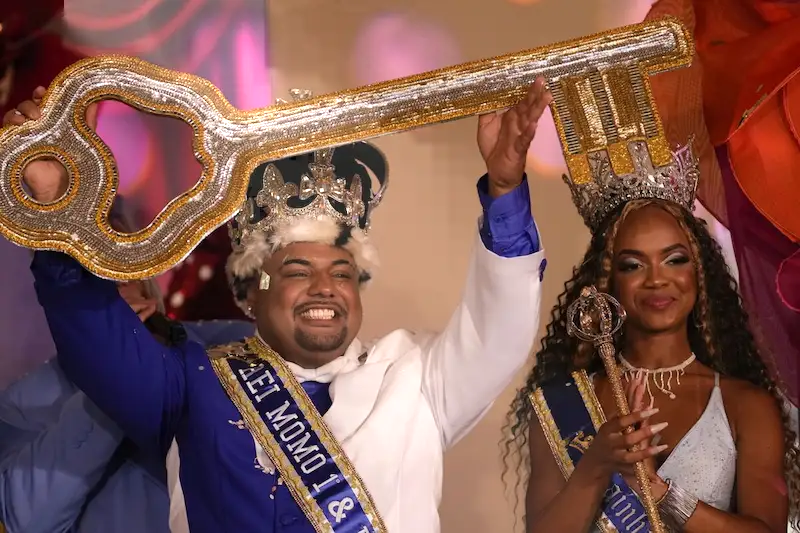


Rio de Janeiro's mayor officially kicked off the vibrant and energetic Carnival festivities with a grand ceremony, crowning King Momo as the symbolic monarch for the next five days. Amidst thunderous applause, Mayor Eduardo Paes bestowed a gigantic, silver and gold key upon King Momo to signal the beginning of the revelry. The ceremony took place in the Botafogo neighborhood's Palace of the City, where confetti filled the air, and the atmosphere was charged with excitement.
The customary characters of Rio's Carnival scene were all present, with revelers dressed as folkloric characters, jaguars, and exuberant clowns known as 'bate-bolas' in their intricate, matching outfits. The festivities, which will last until February 14th, provide people with an opportunity to temporarily set aside their troubles and immerse themselves in the spirit of Carnival.
Mayor Paes issued a decree making the key ceremony an annual official event, ensuring that future mayors are obliged to participate. This action was taken to restore tradition after former Mayor Marcelo Crivella broke with the tradition in 2017 and did not hand over the key. King Momo, played by Caio Cesar Dutra this year, has been charged with presiding over Carnival festivities, participating in parades and costume competitions, and promoting the joy and merriment of partygoers.
Brazil's tourism minister, Celso Sabino, who was also present at the ceremony, announced that an estimated 49 million people from across Brazil would partake in Carnival festivities, representing a 6.5% increase from the previous year. Additionally, around 200,000 foreigners are expected to join in the celebrations, donning glitter and scanty outfits as they take part in lively street parties across Rio, Sao Paulo, and other cities.
In the bohemian Santa Teresa neighborhood of Rio, the Carmelitas street party was already in full swing on Friday morning. One participant, Leonardo Xavier, creatively dressed as a blue-chested Smurf, shared his enthusiasm, stating that he and his friends opted for a quick and easy costume that they could put together on the subway. These street parties are just one facet of the Carnival celebrations, and many participants eagerly anticipate the elaborate parades held in Rio's Sambadrome.
The samba schools, which spend months preparing massive floats and intricate costumes, showcase their talent and creativity in front of millions of spectators during the parades. These performances serve as a fierce competition, with judges awarding scores and selecting the champion. In recent years, the parade themes have increasingly encompassed political messages, criticizing both the state and society. For example, previous parades have depicted the assassination of Black councilwoman Marielle Franco and used satire to portray former president Jair Bolsonaro. This year, the fight for reparations by a Black family will take center stage, reflecting the growing demand for societal acknowledgment and redress for slavery and its lasting impact.
While the spirit of Carnival prevails, authorities are taking precautions to address ongoing issues. Dengue cases have surged in Brazil, prompting the distribution of repellent in the Sambadrome. Rio has also declared a public health emergency. The increase in crime during Carnival is another concern, leading the Rio State's civil police to deploy an additional 3,300 officers and establish a temporary police station at the Sambadrome. The city is already under a state of Guarantee of Law and Order, with federal troops deployed at ports and airports to counter drug circulation after an upswing in violence by militias and drug-traffickers.
Despite these challenges, the atmosphere remains festive and joyous as Carnival enthusiasts immerse themselves in the celebrations. As the videos of Carnival experts' tips flood social media, reminding people to leave behind their cellphones, choose practical costumes, and avoid unnecessary complications, the focus remains on enjoying the festivities responsibly. The spirit of Carnival reigns supreme, offering a unique blend of celebration, cultural expression, and temporary respite from daily hardships.