




In an effort to combat climate change, a small-scale project was conducted last summer at the Miromesnil metro station in Paris. Commuters passing through the turnstiles were able to contribute to the generation of electricity by powering mini turbines that converted kinetic energy. Although the energy produced during the two-day pilot project was minuscule, if implemented across the entire metro network, these turbines could potentially produce 136 megawatts annually, leading to a reduction of 30,000 tons of CO2. This test project, although deemed too expensive for a system-wide upgrade, showcases the emergence of innovative climate ideas.
The project was a collaboration between Iberdrola SA, a Spanish energy company, and students from French engineering school JUNIA. The students are now working on developing more practical iterations of the technology that can be utilized in metro systems in Paris, Madrid, Santiago, and beyond. Their aim is to transform everyday objects into autonomous energy generators to significantly reduce carbon footprints. While the initial project powered signs within the metro station, future iterations could have broader applications.
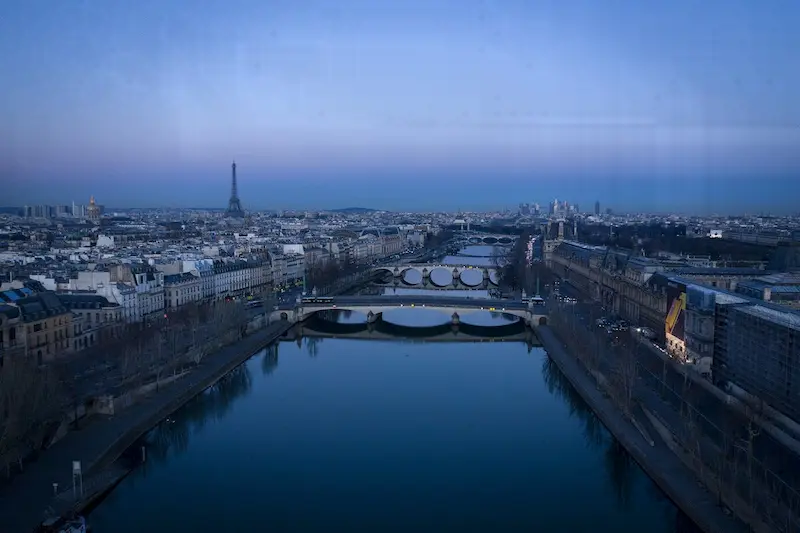
Paris is actively exploring various initiatives as it strives to transition to cleaner power and optimize its energy resources. One such plan involves using water from the Seine river to create a cooling network, mitigating the impact of urban heat islands. Additionally, there are proposals to establish a new river in the bois de Vincennes, fed by non-potable water already utilized in the area's lakes and rivers. Furthermore, the reopening of the covered Bièvre river and adding vegetation to the rebuilt Parvis de Notre Dame forecourt are being considered.
As one of the few cities globally that calculates the carbon footprint of its territory, Paris has made substantial progress in reducing emissions. In 2021, the city's carbon footprint stood at 18.4 million tons of CO2, a remarkable 35% decrease from 2004. The city's new climate plan, unveiled in November, aims to achieve carbon neutrality by 2050. This plan includes powering all municipal public facilities with 100% renewable energy by 2040 and phasing out internal combustion engines in public vehicles, such as garbage trucks and ambulances, by 2030.
Given that traffic contributes 13% of CO2 emissions in Paris, the city is focusing on increasing bike lanes, expanding the Velib shared-bike system, and implementing pedestrianization measures in major squares. Furthermore, there are plans for additional dedicated lanes for buses, taxis, and carpooling. Following the 2024 Olympic Games, Paris intends to establish a Limited Traffic Zone in the city center, restricting travel to pedestrians, cyclists, public transport, and authorized vehicles.
One critical area of focus for Paris is energy efficiency, particularly in terms of improving building insulation. Buildings account for a staggering 72% of CO2 emissions in the city, with most of these emissions stemming from energy combustion for heating purposes. Renovation initiatives aim to achieve "low energy consumption" for all existing buildings by 2050, commencing with government offices and City Hall. The goal for residential buildings is to reduce emissions by approximately 43% compared to 2004 levels by 2030. This includes renovating 5,000 social housing units annually and 40,000 private homes or apartments. The city is also devising a system to support lower-income households in ecologically modernizing their living spaces at minimal or no cost.
While there are financial incentives in place across France to encourage energy-efficient renovations, the process remains complex and challenging for individuals. Michel Dubromel, head of the energy network for France Nature Environnement, remarks that people often find it difficult to navigate the intricate financial system, leading to reluctance in committing to thermal renovations.
France, as a nation, plans to double its renewable energy production to 40% by 2030. Due to its reliance on nuclear power, France already emits less CO2 compared to neighboring countries. However, the aging nuclear power plants will require renovations, potentially diverting resources from other renewable energy sources. The future trend calls for decentralized wind, solar, and hydropower production overseen by regional and local authorities.
Although Paris has made significant strides in reducing energy consumption and increasing local renewable energy production, national progress has been slower. The French government, lacking a parliamentary majority, has encountered difficulties in implementing robust climate-related legislation. This has resulted in delays and rejection of measures such as a proposal to ban gas boilers and create low-emission zones.
Amidst these challenges, it is clear that drastic measures are required to successfully navigate the energy transition. However, with ongoing efforts and innovative projects like the mini turbines in metro stations, Paris remains committed to achieving its climate targets and creating a more sustainable future.