


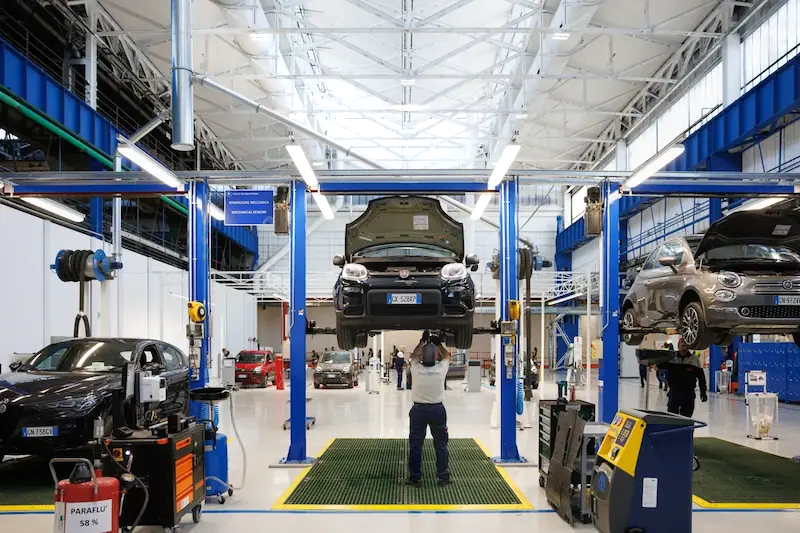


In a significant shift of direction, Stellantis NV has announced its commitment to rejuvenating its Italian plants through the introduction of new models over the next few years. This announcement comes as part of a concerted effort to mend strained relations with the government and union leaders in Italy who have been dismayed by the sharp decline in production.
During discussions held in Rome with unions and Industry Minister Adolfo Urso, Jean Philippe Imparato, the head of Stellantis' Europe region, assured that none of the company's plants in Italy will be closed down. Instead, the company plans to increase capacity by 2026 through the introduction of new models, with a projected investment of €2 billion in Italy next year. Additionally, Stellantis has committed to €6 billion in orders from its suppliers in the country.
Under the newly unveiled plan, Stellantis envisions Italian production reaching 500,000 vehicles in 2025 and anticipates a 50% surge in 2026 to approximately 750,000 units—a level similar to that of 2023. Although Imparato refrained from committing to bolstering production to the 1 million-unit mark previously demanded by the Italian government, he expressed optimism about the growth trajectory.
The company plans to manufacture a new generation of Fiat 500s at its Turin Mirafiori plant in the coming years, in addition to initiating the production of vehicles on a new platform at its Pomigliano facility in southern Italy. The Italian government, led by Prime Minister Giorgia Meloni, has signaled its readiness to invest over €1 billion in the sector in 2025.
The announcement from Stellantis, following the recent ousting of Chief Executive Officer Carlos Tavares, signifies a shift in strategy. The move aims to address the challenges faced by the company, including reduced demand for electric vehicles and escalating competition from Chinese manufacturers. Notably, the decision to relocate production to lower-cost countries under Tavares had strained relations with the Italian government.
With the focus now back on Italy, Stellantis aims to stabilize its operations and protect approximately 40,000 jobs in the country. The recent developments stand in contrast to the situation in Germany, where Volkswagen AG is engaged in challenging discussions with unions regarding potential plant closures.
Elkann, under pressure to address the decline in production, has been proactive in reassuring governments in Italy and abroad regarding future investments. These efforts have not gone unnoticed, as evidenced by his recent meeting with French President Emmanuel Macron to reaffirm Stellantis' commitments to France.
In conclusion, Stellantis' renewed commitment to revitalizing its Italian plants signifies a positive step forward for the company, bolstering prospects for growth and stability in the region.