


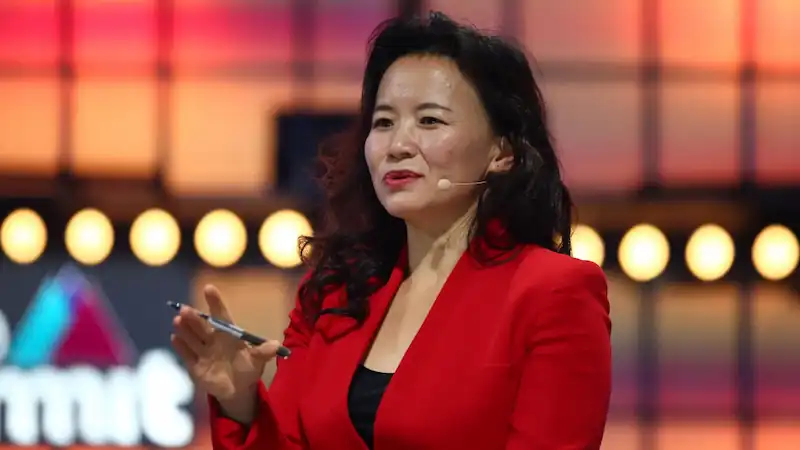


Family and friends of Australian television anchor Cheng Lei have renewed their calls for her release from detention in China, as it marks 1,000 days since she was taken into custody on espionage charges. Cheng, a former business anchor for China's state broadcaster CGTN and a mother of two, has been accused of illegally supplying state secrets overseas, a charge that could result in a sentence of between five years to life imprisonment.
The Australian authorities have expressed concern about her detention, as there have been suggestions from analysts that strained ties between Canberra and Beijing may have provided impetus for the opaque case against her. Although the relationship between the two countries has recently improved, Cheng's prolonged detention remains a "critical issue" that impedes further reconciliation, according to Nick Coyle, Cheng's partner.
"The ongoing delay, the ongoing situation, causes enormous damage not only to Lei and her two children, but I think it's also causing a lot of damage in terms of the efforts by both China and Australia to repair the bilateral relationship," said Coyle. He also mentioned that people in Australia and around the world view her detention with "a lot of negative sentiment," and that "it would be in everyone's best interest for it to be resolved as quickly as possible."
Cheng was on her way to work on August 13, 2020, when she was taken by China's Ministry of State Security, according to Coyle's letter published in The Australian newspaper on Monday. "Now 1,000 days later, we still don't know why she was taken, why she was charged with deliberately vague national security breaches, or when she might be with us again," he wrote.
Australia's Minister of Foreign Affairs Penny Wong also released a statement on Monday, expressing her concern about the ongoing delays in Cheng's case and her hope that she will be reunited with her children soon. Wong added that the ministry would continue advocating for Cheng "at every opportunity with the Chinese government." However, Chinese authorities have not revealed any details about the allegations against Cheng, which Coyle told Tuesday "makes no sense to me."
Cheng was a journalist reporting on "the positive aspects of the China growth story" and China's business engagement with the world. She was "making a very positive contribution in that context - so it has never made sense to me why she was detained," according to Coyle. Observers have also criticized China's secretive, closed-door court process in Cheng's case.
In March last year, Australia's ambassador to China was denied entry to the start of Cheng's trial in Beijing, which he called "deeply concerning." The court has not yet handed down a verdict, delaying the announcement multiple times - leaving Cheng in custody, and her loved ones without clarity on her fate. Cases related to national security are typically tried behind closed doors in China. However, the lack of transparency in Cheng's case against the backdrop of deteriorating relations between China and Australia prompted concerns from analysts that the charges may be politically motivated.
For much of Cheng's detention, there were widespread concerns about her wellbeing. Last June, Coyle told Sky News Australia that Cheng had faced "difficult health challenges along the way," exacerbated by an inadequate prison diet.
Cheng has spent six months cut off from the outside world, limited to those consular visits, which began every month with Cheng "being led in, blindfolded and handcuffed." Since then, she has been placed with other cellmates and given access to an outdoor courtyard for two hours a day, according to Coyle's letter published on Monday. Cheng is allowed to receive and send letters once a month, but other than that, she has had no face-to-face contact or phone calls with loved ones, including her children, aged 11 and 14, who are being cared for in Australia by their grandmother. Coyle is not their father.
"The most difficult issue for her to deal with is the long time that she's been away from her children," said Coyle. "Physically, she's going okay, and mentally she's very tough, very strong, very resilient."