


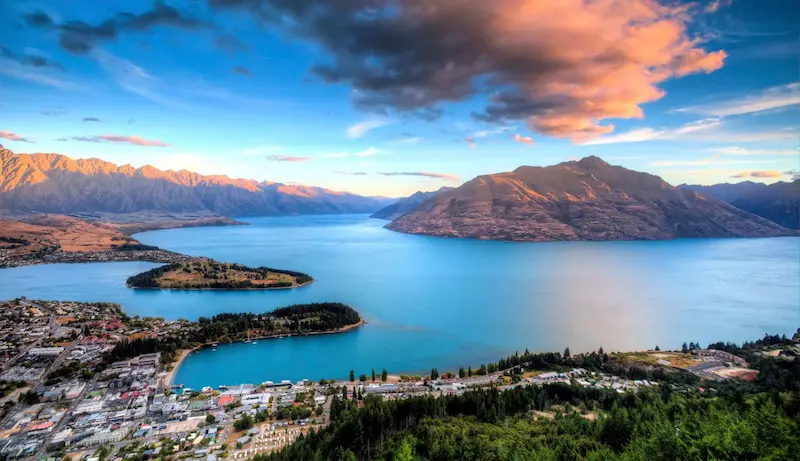


There’s something about New Zealand’s raw, untouched beauty that draws travelers from every corner of the world. Snow-capped peaks, glassy lakes, trails that wind through silence so deep it feels ancient. But beginning later this year, foreign tourists hoping to breathe in that magic might find themselves paying a bit more for the privilege.
Prime Minister Christopher Luxon, speaking this weekend, laid it out plainly. For years, visitors have wandered through places like Milford Track or gazed up at Mount Cook without paying a cent. Now, that’s about to change. Starting soon, overseas tourists will be asked to contribute a fee — somewhere between NZ$20 and NZ$40 (roughly US$12 to $24) — when visiting certain high-traffic conservation areas. And it’s not just a symbolic amount; officials estimate this move could bring in around NZ$62 million a year.
Why now? The answer isn’t exactly a mystery. After wrestling with a recession, New Zealand is sharpening its focus on tourism as one of the main gears to get the economy turning again. And with the sheer number of international visitors flowing into the country’s most celebrated outdoor sites — often making up over 80% of the foot traffic in some areas — the government sees an opportunity.
Luxon, not mincing words, said he often hears surprise from foreign friends about just how freely accessible New Zealand’s natural gems are. “It’s only fair,” he explained, “that at these special locations, foreign visitors make an additional contribution.” That money, he stressed, won’t vanish into general coffers. It’ll be funneled right back into the places people come to see — preserving tracks, maintaining infrastructure, protecting fragile ecosystems that are already showing wear from overuse.
Among the first locations in the spotlight: Cathedral Cove, the Tongariro Alpine Crossing, Milford Track, and of course, the grand backdrop of Mount Cook. These are places etched into postcards and travel blogs, but also deeply rooted in the national identity. That’s why, while tourists will begin paying this fee, locals won’t. As Luxon put it, New Zealanders shouldn’t have to pay to see what is, in essence, their birthright.
It’s not the only move the government’s making to fine-tune the tourism strategy. In November, a transit visa previously required for Chinese travelers will be scrapped, a signal that New Zealand wants to remain attractive — and accessible — to one of its biggest visitor markets.
All of this paints a picture of a country trying to strike a delicate balance. On one hand, it needs tourism — it’s a lifeline. On the other, it wants to make sure that what draws people here in the first place doesn’t get trampled under the weight of its own popularity.
No doubt, some travelers will grumble at the added cost. But others may recognize the logic: when you’re granted access to a place so extraordinary, a small contribution to keep it that way might just be part of the deal.
After all, if those mountain paths and glacier-fed rivers are to remain pristine for generations to come, someone’s got to help carry the weight.