


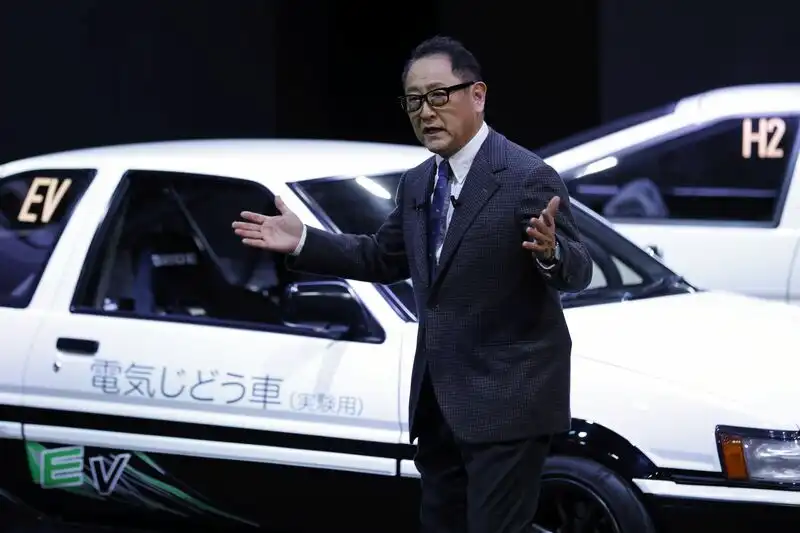


Amid opposition from some foreign investors, Akio Toyoda has been reelected to Toyota's board of directors, receiving the lowest shareholder vote since at least 2010. According to a filing by the world's largest automaker, Toyoda garnered 84.57% of the vote among shareholders at the annual meeting held on Wednesday. In contrast, he received 96% of the vote a year earlier. Although the reduced support does not change Toyoda's position, it may be viewed as a sign of frustration among a small minority of investors after Toyota's rivals have outpaced it in the transition to battery-electric vehicles.
Toyoda stepped down as CEO in April and became chairman. However, he has continued to advocate for a "multi-pathway" approach to carbon neutrality, vouching for continuing to sell gas-electric hybrid cars while investing in EVs, hydrogen, and alternate fuels. Even though he faced opposition, the results of the shareholders' meeting and an aggressive messaging campaign around Toyota's EV strategy have helped fuel a 15% rally in its shares over the past six days, its biggest jump since August 2020.
In a well-timed move just before the annual meeting, Toyota released details from a day of technology briefings held last week at its research facility near Mount Fuji, aimed at boosting confidence in the company's ability to sell 1.5 million battery EVs annually by 2026, and 3.5 million by 2030. Prior to the Annual General Meeting, three European asset managers demanded transparency on lobbying over climate policies that appear to favor EVs or ban fossil-fuel vehicles, but shareholders rejected the proposal.
The board opposed the proposal, stating that the company is already releasing data and information on its activities related to climate change. Koji Sato also addressed the shareholders' gathering for the first time as CEO. Sato succeeded Toyoda in April and has supported his predecessor's strategy. However, he has also championed an "EV-first" approach.