


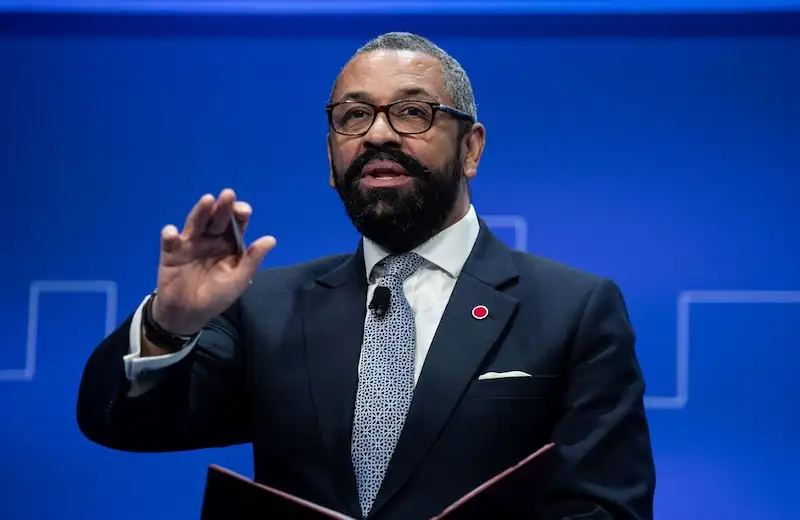


UK Foreign Secretary James Cleverly has delayed his planned trip to Beijing due to the mysterious disappearance of Chinese Foreign Minister Qin Gang, according to sources familiar with the matter. Qin's absence from public view for nearly a month has raised questions and caused a delay in Cleverly's visit, which was originally scheduled for late July. While the exact reason for Cleverly's decision is not confirmed, Qin's situation is believed to be a major factor. The two countries are now considering alternative dates for the visit, as UK Prime Minister Rishi Sunak aims to repair strained relations with China.
The unexpected absence of Qin has had ripple effects on diplomatic relations between China and other countries. Cleverly's trip to Beijing was intended as part of the UK's efforts to mend ties with China, particularly in light of China's crackdown on Hong Kong and Russia's invasion of Ukraine. However, with Qin's disappearance, the visit has been postponed, highlighting the potential consequences of uncertainty surrounding a high-ranking Chinese diplomat.
Qin, who transitioned from US ambassador to foreign minister last year, has not been seen in public since late June. Even comments about Qin have been removed from Foreign Ministry briefings, leaving speculation about his physical condition. His last public appearance was on June 25, when he met officials from Russia, Sri Lanka, and Vietnam. Former foreign minister Wang Yi has been standing in for Qin at recent diplomatic meetings.
The delay of Cleverly's trip demonstrates the potential impact on diplomatic ties caused by Qin's absence. China has been seeking to strengthen relationships with European nations, including the UK, to support its economic growth and avoid worsening tensions with the US and its allies. A meeting between Cleverly and Wang, who leads the Communist Party's foreign affairs panel, would deviate from diplomatic norms, indicating the significance of Qin's absence.
The lack of information surrounding Qin's whereabouts and condition raises concerns about the shrinking access to information in China. Over the past year, the Chinese government has restricted access to corporate data, court documents, and academic journals, impeding investors' ability to assess the country's economy. This increasing opacity in conducting business with China is a challenge when dealing with authoritarian states centered around the power of one leader.
The delay in Cleverly's visit also highlights the perception that the UK is falling behind Germany and France in their engagement with China. Since President Xi Jinping began his third term as party leader in October, no senior British official has visited China. This further raises questions about the country's ability to effectively navigate diplomatic relations with China and ensure its interests are represented on the global stage.