




Nigeria's loose fiscal and monetary policies are hindering the stabilization of the naira against the dollar, even two months after the currency was allowed to trade freely, according to the International Monetary Fund (IMF). The excess liquidity created by the loose policies is making it difficult for the naira to find stability. Ari Aisen, the resident representative for the IMF in Nigeria, stated that the increasing transfers from the central bank to the government are flooding the market with naira, leading to a decrease in interest rates and discouraging savings. This situation is also deterring the inflow of dollars, which could potentially support the stability of the naira.
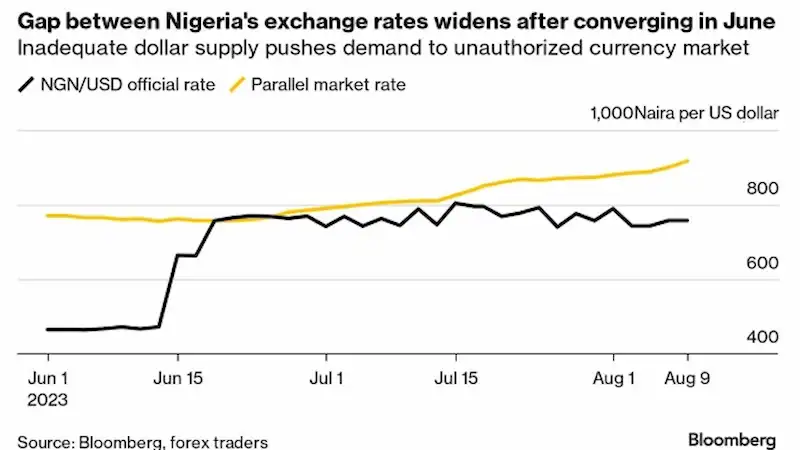
Aisen further explained that there is an oversupply of naira chasing an insufficient amount of foreign exchange. This imbalance is expected to take some time to rectify, as the supply of foreign exchange needs to build up. Since the mid-June easing of foreign exchange controls by the Central Bank of Nigeria, the naira has experienced significant volatility, with a 40% plunge in the official rate and trading between 750 and 800 naira to the dollar over the past month. Additionally, the spread between the official and black market rates has widened again, reaching its highest level since mid-June.
Despite the central bank's efforts in implementing a cycle of monetary tightening, with the benchmark interest rate being raised by over 700 basis points since May, Aisen believes that interest rates need to go even higher. He mentioned that rates on treasury bills and other financial instruments should increase to give the naira a fighting chance. However, recent treasury bill auctions have shown yields below the benchmark rate, suggesting that interest rates in Nigeria still have room to rise.
While President Buhari's reforms and policies have led to positive outcomes such as a rally in dollar bonds and a boost in the stock market, the availability of foreign exchange has remained constrained. S&P Global Ratings recently upgraded Nigeria's credit outlook from negative to stable, but this has not significantly impacted the supply of foreign exchange. Aisen stressed the importance of tightening fiscal and monetary policies to stabilize the exchange rate and the economy in the long term, although he acknowledged that achieving this stability could take up to 18 months.
In conclusion, the IMF criticizes Nigeria's loose fiscal and monetary policies for their adverse effects on the stability of the naira. The excess liquidity, low interest rates, and insufficient supply of foreign exchange are hampering the country's efforts to stabilize its currency. Tightening of fiscal and monetary policies, along with a focus on reducing money supply, is necessary for both the stability of the naira and the overall economy.