


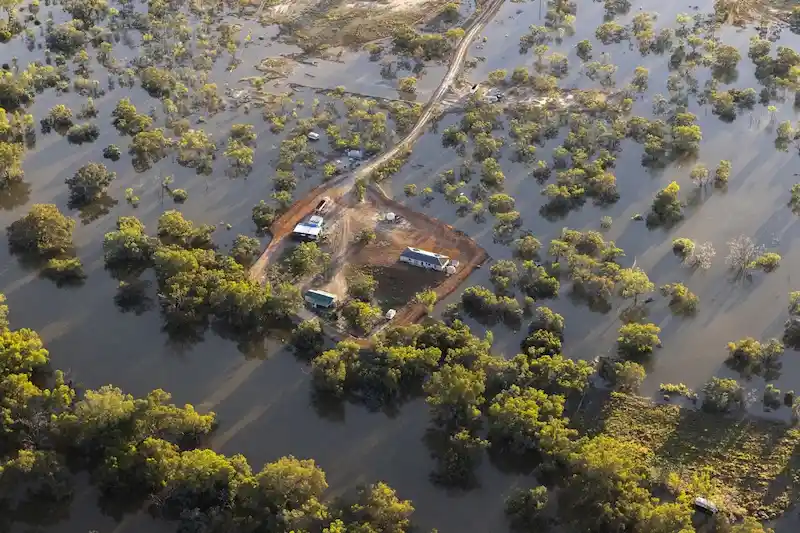


Scientists have long predicted that the burning of fossil fuels would result in rising average temperatures and lead to dangerous extreme weather events. In recent years, a field of science known as extreme event attribution has emerged, which connects global warming more definitively to severe episodes of weather. This has allowed for the routine linkage of heat waves, cyclones, floods, droughts, and wildfires to climate change, many of which have been making headlines in 2023.
Heat waves are the weather events most directly associated with human-induced greenhouse gas emissions. The increase in heat, coupled with dryness and wind, has fueled devastating forest fires around the world. Scientists now have strong evidence that climate change is causing wildfires in the western United States, Australia, and other regions to become significantly worse. In fact, the US fire season has extended by two months compared to the 1970s and 1980s. Additionally, global warming is intensifying tropical cyclones, such as hurricanes or typhoons, by providing them with warmer ocean waters and more moisture-laden air.
The oceans have also experienced significant changes. The record-high ocean temperatures in 2023 have contributed to the formation of numerous typhoons, cyclones, and hurricanes. Hurricane Hilary, for instance, rapidly intensified as it approached California in August, transitioning from a tropical storm to a Category 4 major storm within just 24 hours. The phenomenon of rapid intensification, where a storm's winds increase by 35 mph in a day, has become more frequent in a warmer climate. Hilary's winds intensified by a staggering 65 knots (75 mph) within the span of just one day. The increasing ocean heat has also disrupted larger weather patterns, causing persistent high-pressure systems that have resulted in extreme heat waves across North America, Africa, Europe, and Asia.
The year 2023 has already witnessed a series of extreme weather events. July marked the globe's hottest month on record, following the hottest June, setting the course for 2023 to become the warmest year ever recorded. Heat waves have swept across North America, Asia, and Europe, with China experiencing record-breaking temperatures. The Northern Hemisphere has been battered by floods and violent storms. In Canada alone, a staggering 13.9 million hectares (34.3 million acres) of land have been ravaged by record wildfires, which have also sent smoke billowing into the US. The skies over New York City and Washington turned orange, while the air quality reached unhealthy levels in June. Major cities, including Phoenix, Arizona, have endured unprecedented high temperatures above 110 degrees F (43.3C), causing hundreds of casualties. In India, where scorching temperatures exceeding 49C were recorded last year, parts of the country experienced sweltering pre-monsoon heatwaves in July, posing a threat to power grids, crops, and the wellbeing of millions of workers.
The link between extreme weather events and global warming is highly certain. Since 2011, the majority (70%) of extreme weather events scrutinized by researchers have been shown to be more likely or intensified due to global warming, according to CarbonBrief.org, a UK-based nonprofit focusing on climate science.
While climate change has led to shorter winters and reduced the likelihood of blizzards and extreme cold snaps, the warming of Earth's poles has had its own consequences. The polar vortex, a belt of winds that typically traps cold air in the Arctic, has become disrupted, releasing frigid air across large parts of the United States. Texas experienced a record cold spell in February 2021, resulting in the crippling of its power grid.
If current warming trends continue, the global temperature increase since the mid-19th century will surpass 1.5 degrees Celsius - a limit deemed dangerous by UN member countries - as early as the 2030s. According to the United Nations Intergovernmental Panel on Climate Change (IPCC), extreme weather events will intensify exponentially as global warming reaches 2 degrees and quadruple when it surpasses 3 degrees.
The ramifications of these extremes are dire. Excessive temperatures alone cause over 5 million deaths worldwide each year, with heat-related deaths on the rise. Climate change is fundamentally altering living conditions and profoundly affecting financial considerations. Industries such as agriculture, travel, and insurance are increasingly exposed to weather-related risks. In 2020, insurers incurred $89 billion in losses, making it the fifth-costliest year on record. The bulk of these costs were due to natural disasters, including hurricanes Laura and Sally. It has been estimated that climate change amplified the damage caused by Typhoon Hagibis in Japan in October 2019 by $4 billion, and rising sea levels made Hurricane Sandy, which struck the United States in 2012, $8 billion costlier.