


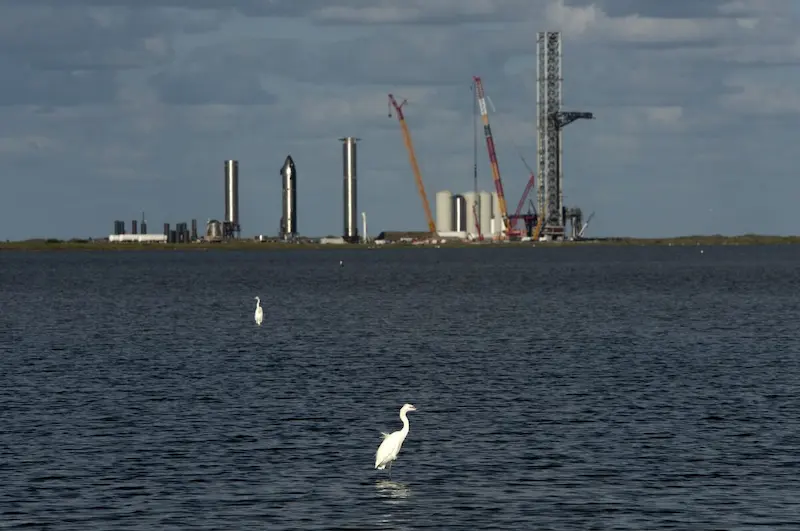


SpaceX's decision to conduct a second Starship rocket test flight from a launchpad located near a Texas wildlife refuge has once again ignited a wave of criticism from environmental groups. These groups, including the American Bird Conservancy and a Native American tribe, previously sued the Federal Aviation Administration (FAA) following an initial launch in April. Now, they claim that the agency failed to address their concerns and neglected to follow proper procedures before giving approval for the second flight, which took place in November.
The coalition, in their revised complaint filed on Friday, reiterated their demand for a judge to order the FAA to revoke SpaceX's license. However, both the FAA and SpaceX representatives refrained from commenting on the matter.
The launch site, known as Starbase, resides at the southern tip of Texas and is surrounded by a wildlife refuge that serves as a habitat for numerous endangered and threatened species. During the April 20 launch, a cloud of pulverized concrete, as well as steel debris, was scattered over six miles from the launch pad, crossing SpaceX's property and reaching an adjacent state park situated along the Rio Grande Valley and the Gulf of Mexico.
The amended complaint, filed on Friday, accuses the FAA of neglecting its responsibilities under the National Environmental Policy Act among other concerns. Although the second launch on November 18 had considerably less impact than the earlier one, as SpaceX had made modifications including the installation of a massive steel plate and a deluge water system, the coalition argues that the FAA did not undertake sufficient assessments to ensure that future launches would not cause significant environmental damage.
According to the court filing by the coalition, the FAA failed to analyze the adequacy of the reformulated launch pad and deluge water system. They further claim that the agency did not consider alternative designs to the novel steel plate implemented by SpaceX, a design that has never been employed at any other launch facility.
This mounting legal battle, filed as the Center for Biological Diversity v. Federal Aviation Administration, could have significant implications for SpaceX's operations. As the proceedings unfold, the court will assess the merits of the coalition's claims and the actions taken by the FAA in granting approvals to SpaceX. The outcome of this case will likely impact the future utilization of launch sites near ecologically sensitive areas, shedding light on the delicate balance between space exploration and environmental preservation.