


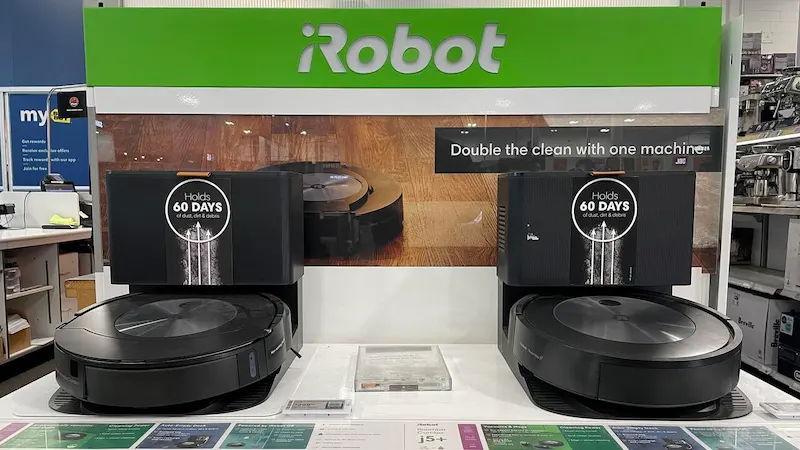


Amazon.com Inc. has decided to abandon its planned $1.4 billion acquisition of iRobot Corp., the maker of Roomba robotic vacuums, following clashes with European Union regulators who threatened to block the deal. The fallout from the failed acquisition was immediate, with iRobot announcing a restructuring plan that includes a significant reduction in its workforce, resulting in about 350 job cuts, or 31% of its employees. As a result of the news, iRobot's shares plummeted 19% to their lowest level since 2009, while Amazon's stock saw only a marginal increase.
The decision by Amazon to back out of the deal indicates the mounting pressure the tech giant is facing to demonstrate that its actions do not harm competition as its influence expands across multiple sectors. Antitrust regulators in both the US and Europe are increasingly cautious of large tech companies acquiring innovative startups, as it could stifle competition and innovation.
Last week, Amazon met with the Federal Trade Commission's (FTC) senior antitrust staff, who recommended a lawsuit over the acquisition. Executives and lawyers from Amazon were scheduled to meet with the FTC's three commissioners this week to make a final push for the deal. However, the European Commission, the EU's executive arm responsible for antitrust matters, had already indicated that it may veto the acquisition.
Instead of offering remedies to address the concerns raised by regulators, Amazon decided to walk away from the deal. The European Commission had expressed concerns that Amazon could potentially disadvantage other robot vacuum cleaners on its platform while promoting its own products. Moreover, the commission stated that Amazon could potentially exclude rival brands from its platform, thereby reducing competition. Despite attempts by regulators to pressure Amazon into offering concessions, the company did not comply.
Amazon's decision to abandon the iRobot acquisition comes with a $94 million termination fee to be paid to iRobot. This move follows a similar decision by Adobe Inc. to withdraw from a planned $20 billion acquisition of startup Figma Inc., after encountering regulatory obstacles in the EU and the UK.
While the financial impact of the terminated deal is insignificant for Amazon, it underscores the challenging regulatory environment for large tech companies looking to complete acquisitions. The failed acquisition also allows Amazon to avoid shouldering the losses incurred by iRobot, which has struggled in recent years. The company has witnessed a decline in sales as the pandemic-induced surge in home improvement projects subsided. iRobot had to secure a $200 million financing facility last year, and Amazon had already reduced its per-share offer by 15%.
Amazon's intention to acquire iRobot was announced in August 2022, aiming to expand its presence in the smart-home gadget market. The company has also developed its own home robotics franchise with Astro, a home security bot. Amazon has been a key customer of iRobot for several years, representing a significant portion of its sales. The vacuum maker is also a customer of Amazon Web Services.
The opposition to Amazon's iRobot acquisition highlights the tension between its retail operations and its ambitions for the smart-home ecosystem built around its Alexa voice assistant. Regulators, such as the FTC, have expressed concerns over the deal, including the potential monopolistic control Amazon would have over the smart-home device market and potential privacy violations by granting access to users' home data.
This failed acquisition may serve as a warning for Amazon's future acquisition plans, as the European Commission has pledged to closely monitor deals in which established sales channels acquire suppliers heavily dependent on the acquirer's infrastructure and customer reach for success.
Regulators in Europe and the US are becoming increasingly skeptical about the dealmaking of Big Tech companies. The EU regulator, for instance, recently rejected Booking Holdings Inc.'s bid for Sweden's Etraveli Group, and regulatory scrutiny around Microsoft Corp.'s partnership with OpenAI is being explored. In the US, the Biden administration has been particularly active in challenging mergers, setting a record in the number of merger challenges filed.